CromsWords

1

Monday, March 25, 2013

Live Show Photo + Video Recaps

Attending live shows in rapid succession can sometimes lead to "show overload."  If you are out every (or every other) night - when do you get the uninterrupted time to digest and catalog the events?

One method is the immediate, next-day, quickly thrown together blog post - referencing that night's event only.  The internet is filled with this sort of thing, coming at us all on a daily basis.  It's the equivalent of posting pics from the night before in one of your facebook photo albums.  That's all fine and good for what it is, but nothing beats a dedicated URL link to something a bit richer in content, with a smattering of (hopefully) intelligent commentary.

What follows here then, is a Photo and Video Blog of shows attended by yours truly over the last month.

Starting with Thursday, February 14, 2013 (Valentines Day!) at Webster Hall's Studio - presented by live show impresario Kristina Tequila.


First up was a solo set by Cassie Ramone


As most discerning music fans know by now, Cassie is an accomplished singer/songwriter who helped formed and plays in two bands - The Vivian Girls and The Babies

Listen in on how she sounded at this show:


With an only an acoustic guitar, some excellent FX pedals and her voice properly mixed, she create quite a huge sound, all by herself.


Another song:


A really great sound!

After the set I got to chat and joke around a bit with her.


She's super cool.  Smart, witty, with an experienced sarcastic side that still not too bitter to enjoy the good things this life has to offer - and she got my humor.  I would definitely call myself a fan of her music - and her personality.

Up next was a band I've written more than a few words about over the last couple of years,

Xray Eyeballs


Members Carly (bass) and Liz (keyboards) exude a glam/goth style that is the epitome of downtown New York rock.


O.J. complete the male side of this equation, as he thrahses and flails his guitar, wearing an appropriate Siouxsie Sioux t-shirt.


Things I've written previously about this band:

Deli blog:


The XRay Eyeballs interview:


Live coverage from SXSW:
http://davecromwellwrites.blogspot.com/2012/04/day-6-sunday-18-sxsw.html


Soon it was time for one of New York's most dynamic and exciting bands - Hunters


Led by singer/guitarist Derek Watson and lead vocals by the incredibly extroverted stage presence of Isabel Almeida.


On the song "Deadbeat," Isabel coos, purrs and pleads about how she "wants it and needs it."


It never hurts to be good looking and having a pliable body that can be contorted into pretty much any position desired.


Derek's playing, guitar sound and the rhythms overall position themselves somewhere between the twisted jungle stomp of The Cramps and tonal quality of Sonic Youth.

There are occasional quiet passages too.  As witnessed in this clip here:


Little lost pippi longstockings


This Acid Head wants you to stay


Just a girl and her microphone


A writhing good time!


After a quick turnaround, show headliners Total Slacker took to the stage.


With the bowl-cut stylings of Tucker on vocals & guitar - and Emily on bass, their doom-laden sludge and art school presence is an appealing combination.


Guitarist Tassy adds a wild-card element to it all, as the poster-child for Brooklyn's endess gig/endless party attitude.


Listen in as the T-slacks get down and dirty for you:


For additional information on this show, see my Deli Mag preview here:


*****
The very next night it was out again to catch the Converse Rubber Tracks Live presentation of Widowspeak and The Vivian Girls at Music Hall Of Williamsburg 


Making it to the show just in time to catch Widowspeak (traffic nightmares on a Friday night needing to be overcome) the band was now fuller than when I had seen them the previous year.


However, the focal point clearly is very much still Molly Hamilton's vocals and centralized presence.


Guitarist Robert Earl Thomas keeps everything from getting too dreamy and sleepy by ripping guitar lines with a forceful clarity.


Cool bass too.

Soon it was time for main attraction The Vivian Girls


This was something of a special, rare appearance by the band, as the two princial founding members - guitarist Cassie Ramone and bassist Katy Goodman have been working hard on their respective post-Vivian bands - Cassie's The Babies and Katy's La Sera


I have been following each of the post-VG bands pretty closely, having written more than a few features about both of them over the last year.


As the Vivian Girls, they they really let loose for this show, with a wilder, more punk-rock vibe.


*****

Two nights later it was out again to Brooklyn Bowl and the 1.21 Gigawatts Issue Four Release Party

Opening the show was the always loveable Haybaby


Leslie, Sam and Zach looked and sounded great on the big stage of Brooklyn Bowl


The audience was totally into it!


Leslie made the most of her big moment here


Sam appeared to be enjoying the higher level of stage and sound as well.


Be sure to check out Haybaby's good time music here:

http://haybabyband.com/

On the changeover I made my way up the back staircase into the band backstage area.  After a fun chat and encounter with the various personalities there, we headed down the stairs, which provided some interesting points of view:


Heaven's Gate was now on stage


I liked their cut-above-the-usual-rudimentary-noise sound, and their frontsinger had enough going on to hold my interest.


Even more interesting (and amusing) was the clearly advanced musician bass player, who played a flipped-over to left-hand postition bass with only 3 strings!  Now that's not giving-an-F-rock and roll!


Taking a moment to walk around and experience the overall vibe, I dropped by the DJ booth to chat with my buddy (and musican in his own right with his band The Grand Resort) Andres.


He played a lot of great stuff inbetween the bands, including a personal fave of our "Soon"
by My Bloody Valentine


After a short break, a band I've written about a lot lately - Lazyeyes took to the stage.


The band looked and sounded as good as ever.


Paul, Cheddar and Justin maintaing and excelling as the core of this unit.


The addition of former Ringo Deathstarr (and current Cool Serbia) guitarist Renan has given what was already a great sounding band an additional sonic boost.

Previous coverage of Lazyeyes can be found here:

http://davecromwellwrites.blogspot.com/2012/12/december-live-shows-lazyeyes-sparxx.html

As well as these multiple Deli Mag features:

http://nyc.thedelimagazine.com/node/12230

http://nyc.thedelimagazine.com/node/11918

and Cool Serbia here:

http://davecromwellwrites.blogspot.com/2012/11/dead-leaf-echo-ringo-deathstarr-cool.html

Final band of the night was Jangula


They've got a cool sound, and their core of gyrating chick fans really dig 'em.


Two night's later, it was time to head out in the freezing cold to catch a band that has grown quite near and dear to my heart - the one and only Sparxx


Led by the inimitable Heather Sparx on lead vocals, dance moves and personality - with a sonic foundation forged by music maestro Justin Mathews - there is much to like.


Their live sound benefits tremendously as a result of the powerfully fluid prog-rock-style drumming of Cinque Ubangi Kemp.  The guy is (as they say) "a Monster."


The band premiered a couple of new songs on this evening.  Here is "Popular Science"


Like all of Sparxx songs - there are wonderfully musical hooks to latch onto - heartfelt lyrics - and as good a sound quality as one might hope for in a club setting.


One more new song - "The One" (as in - "you're not . . . ")


Cute cats make everything better.

Headlining this evening of glamorous festivities was the complimentary synth, percussive and vocal act  Vandana Jain


At times her music reminded me of Kraftwerk's Trans Europe Express


Her stylish and exotic looks added a level of appeal to the overall presentation.


She was accompanied by an electronic percussionist who helped weave the dense layers of sound produced.

Listen to this particular performance:


Here the sound falls somewhere between Goldfrapp and the Yeah, Yeah, Yeah's


*****

The very next night I was at it again.  This time over to Brooklyn's Shea Stadium.
Opening this night's festivities was Hippy (who, it seems plays every single night of the week)


As previously mentioned in this blog here, Nick, Jenny and Jhon create a happy vocal sound that skewers towards The Pixies upbeat moments.


Previous chronicles of Hippy live show activity can be found here:

http://davecromwellwrites.blogspot.com/2012/12/december-live-shows-lazyeyes-sparxx.html

Following them was the band I've probably seen more times than any other - The Vandelles


Along with their great sound, the band now features a dazzling over-the-top light show

Check out their live performance of the wonderful Beat Happenings song "You Turn Me On (Dead Man)" which they released as a single last year:


Jasno took a great classic song and made something extraordinary in the studio.  This live performance here did it justice as well, and the lighting adds an immesurable element that you rarely see anywhere else at the club level.  The only other band I know that does this as well is The Sunshine Factory (who also travel with a dedicated lightman).


The frequently changing hues makes for wonderful images.


While the exploding flashes create a dramatic effect that only enhances the overall experience.


Following them was another band I've been checking out locally quite a bit in recent times,
the drolly named Slonk Donkerson


The importance of bandnames aside, these dudes take their music seriously enough, with a jammy vibe running through their pop compositions.


The sound is a power three piece that walks the line between indie and traditional rock.


Parker exhibits a fluid dexterity on guitar.


While the rhythm section of Dylan and Zach locks it all down tight.


Find out more about this band here:


*****

Amazingly (for me lately) it was a full 6 days until the next show attended.

Heading over to one of the best venues in NYC - The Mercury Lounge - it was a night of festivities to celebrate the release of Dead Leaf Echo's full length debut album "Thought and Language"

Arriving in time for a spirited pre-show chat with Tell All Your Friends PR reps Brid and Mona, it wasn't long before tour support Lorelei took to the stage


This legendary band began in 1990 as a 5-piece in Washington, DC in the heyday of the city's indie scene, but quickly stripped down to 3 members in 1992 after one single. They subsequently released several recordings on Slumberland Records, including the 1994 LP, "Everyone Must Touch the Stove", plus a few things for other labels.


After a number of years working on it, the band released an album of new material titled "Enterprising Sidewalks" in the summer of 2012.

I loved their jammy live sound, and in particular the work of lead guitarist Matt Dingee

Find out more about them here:

http://lorelei-dc.bandcamp.com/

http://www.slumberlandrecords.com/catalog/show/232

Headlining the night was a band I've seen probably a dozen times at least.  However, this time was to celebrate the release of DLE's ambitious literary work "Thought and Language"


Though further personnel changes have happened since the last show attended, the core of the group contines to center around LG and Ana  


  This is a rawer and more "live" sounding version of the band.  Gone are the click-track bass patterns in favor of all live instruments.

  A pleasant surprise was seeing old friend Kevin now manning the drums.

 
When not playing keyboards, Ana and LG delivered guitar textures that stayed true to their orginial sound, while adding additional element of chaos.


  My previous feature on this band can be found here:   http://davecromwellwrites.blogspot.com/2012/11/dead-leaf-echo-ringo-deathstarr-cool.html (which contains links to 7 other features)  
*****      

The final night of this three week catalog was the first day of March, appropriately a Friday night

Having a show in what essentially was someone's Brooklyn apartment may not sound at first like an ideal location, but this one actually worked rather well for it.

Catching another show by familiar faces Girl Toy had me smiling and grooving along to it's overall rock'n'roll-ness.


Beatrice, Olivia and Lindsey thunder out an appropriately sludge-heavy sound that alternates at times between punk rock and somewhat heavier sound.


Beatrice is the band visionary and writes most of the songs. 
Her mastery of that Fender Mustang is equally impressive.


Lindsey brings what she always does to every band she's ever played in.  Solid bass playing, good background (and some lead) vocals and a personality that is the opposite of shy.


Olvia added power, bash and pop to her drumming that belies her delicate appearance.


Communal friends and fans show their support (some quite stylishly so)


Find out more about Girl Toy here:


After their show I had to high tail it out of there and head over to the Secret Loft (Vandelles HQ) to catch a performer who had caught my interest previously and was now playing her debut show in NYC.

Lilly Wolf is a dynamic singer and creator of dance music that appeals to
 my Sophie Ellis Bextor fan side


With her musical partner Alex providing sonic layers under the vocals, an equally dazzling light show made for an outstanding experience.


Lilly and Alex appear to know exactly what kind of sound they want, and excuted it perfectly.

Check out their lastest song and video - "Strictly Luxury"


The glamorous and sometimes androgynous imagery presented is well suited to it's overall theme of opulence and financial independence.


Lilly's attractive appearance was well suited for a performance at The Vandelles HQ


Flashes of visual brilliance to accompany the all encompassing sound


Dance Music Diva


My pleasure to meet the artist post-performance

Find out more about Lilly Wolf here:


Monday, March 11, 2013

Ablebody - All My Everybody - EP Review


Former Depreciation Guild and Pains of Being Pure at Heart guitarist Christoph Hochheim has created a new solo project called Ablebody, and will be premiering his new songs live at SXSW. Appearing to have put aside his primary instrument in favor of synths, samplers and a laptop, the most surprising aspect are vocals much stronger than anyone could have anticipated (since he never sang in either of those bands). The recently released 5 song EP’s cover image is a seated body with no head, placing clear emphasis on the band name meaning. That of an able body, ready for instructions.

Chimes on the dominant beat accentuate the multilayered atmospherics of first single“Sally Hot Jazz.”  With vocals that evoke Tears For Fears at their peak (“Sowing The Seeds Of Love”) the chord progression does in fact touch the edges of actual jazz. Wonderfully streamlined at under three minutes in length, impeccably crisp synth textures share sonic space with a marching, natural sounding percussion (capably supplied by former Depreciation Guild band member and twin brother Anton) while otherworldly sine waves build to a sunburst conclusion.

“No Room For I” expands on this sonic palette as its near five minutes in length would allow. Brief moments of sparser instrumentation encourages focus on the emotion being conveyed. Curiously, this wonderfully strange and mysterious song’s title does not seem to be mentioned even once. However, hook sequences with the repeated lyrics “one more night” and “I can see your eyes” create the sense of wonder as to why it wasn’t called either of those. Vocal placement is artfully crafted here as deeper harmony cascades under the higher register lead.

The cleverly titled “Phantasy” pops along a synth bass and danceable beat with those wonderful chiming bell sound samples at the forefront. Using perhaps The Pet Shop Boys as a reference point this time, the bridges are still more sophisticated structurally, with minor chord passages lifting the track above mindless dancefloor fare.

“Quick & Painless” slows everything down significantly. Near dirge-like in overall pacing, chirping synth textures evoke “The Man Who Fell To Earth” era David Bowie . The overall feeling is as reverential as seeing sunlight streaming through a cathedral’s stained glass window.

Closing track “Sister Marie” is a Harry Nilsson composition that surprises, not only as a cover choice, but also in its execution. Presenting this one as something you might hear on a post-Pink Floyd Syd Barrett solo album, it is perhaps a fitting conclusion to a most creative debut.

Links for further information:

http://ablebody.bandcamp.com/

http://mysocialist.com/blog/2013/03/11/review-ablebody-ep/

Wednesday, February 27, 2013

Eraas Interview - Foreboding Percussive Synthscapes

"Black House" leads off Brooklyn band Eraas’ self-titled album with an under two-minute instrumental of sustained textures. The track starts out mysteriously pensive, but ultimately transforms to a more dark and foreboding mood. This unsettling feeling is a theme that runs throughout the whole album. Deeper tracks like "A Presence" use metallic klang and deep tom percussion counterpoints against atmospheric synths and guitars. Vocals are delivered in hushed cadences. The rise and ebb of percussive pulses and sustained sound washes create tension and anticipation. "At Heart" begins with (then reprises) mechanical clacks that sound like pumping oil rigs off in the distance. Rolling toms and a dominant bass line create a foundation for falsetto vocals over top. “Ghost” emerges by way of slow, distant buildup.


Sleigh bell percussion shakes over a pulsing, heartbeat pattern as guitars engage in call and response open note structures. Block piano chords and cave-dweller drumming sets the pace for “Skinning” as various sustained melodies weave in and around it. Vocals are more discernible, with the tandem falsetto paired against a lower pitched tenor. “Moon” serves as an ambient interlude into “Briar Path,” which comes on driven by a clearly defined bass progression. The descending vocal melody line in “Fang” pairs nicely against a commanding bass line, while shorter percussion enhanced tracks like the aforementioned “Moon” and “Crosscut” place emphasis on overall ambience.


* * * * *

Q: The sound quality of the entire recording makes for a wonderful headphone listening experience. What did you use to create the sonic textures on the opening track “Black House?” Was it a difficult, labored recording process? Or did the tracks and ideas come together relatively quickly?

A: Thanks. Yeah that track is actually some bits of viola, violin and cello and some other things mixed in. Wind chimes in a strong wind. I think the landscape from Days Of Heaven was in mind for that track. The recording process was fairly labored, though I don't want to sensationalize it as bands often do. Bands love to say "Making this record was a nightmare" or amp up the fact that it was really difficult. We love the process and won't release the result til we're happy with it. A lot of work went into writing and recording ERAAS, but it was quite rewarding actually. A lot of it was about discovery and chance. I think it's important to be as specific as one feels necessary in order to execute something to their intention, but it's also bad to get caught up in analyzing things too much. I feel that more than 50% of the time "first thought - best thought" applies.


Q: What inspires the design of a track like “A Presence?” Do you create it with cinematic thoughts in mind?

A: I think this song has a "repetition as a form of change" vibe in mind, though it's not too repetitive on the whole, more the bass and drums in it that are after that. It was created, as most of this album was, with as you put it "cinematic thoughts in mind" - I think music is really visual for us, so whenever we're working on stuff it's less focused on the machinations of the elements than it is on the overall mood that we're trying to create. When we make music we're really just focused on creating a mood.


Q: There is an impression given at points within your song"At Heart" that sound like oil rigs clanging off in the distance. While rolling tom tom percussion create a feeling not dissimilar to the seminal work of Kate Bush and her groundbreaking "Hounds of Love" album, in particular the track "Running Up That Hill." What is it about the mood created by atmospheric washes and rolling percussion that appeals to you? Do you feel this kind of listening experience creates a time shift in ones perception?

A: Interesting comment on the oil rigs, and arguably more interesting about Kate Bush. We did not have that in mind at all. I'm not really sure we were thinking about a time shift in one's perception. But I will say that the atmospheric washes as you described did inform the rest of the song. It was started by recording chimes on a tape recorder that weighs about 8 lbs - then recording the warbled playback of that through a mic and manipulating it. That set the tone for the song and we built the rest of it around that sample. Vocals were last.


Q: Your track “Ghost” evokes thoughts of spiritual forces that have been with humanity since the very beginning. Who or what are the ghosts that impact your life?

A: I guess memories, nostalgia, romanticizing the past as well as the future - and decidedly *not* romanticizing the past or the future. The song is actually more political/social than anything regarding the direct relationship one has with a ghost or ghosts from their past/present. The first line is "Down the stairs of broken hope while torches light the big wall.." - it resolves into a destructive force that comes to aid in an unjust situation.


Q: The lyrics for “Briar Path” emerge by way of high/low vocal tandem, contributing to a sense of mystery and wonder. It’s more likely that the “briar” referenced is less about tangled plantlife, but instead suggests a difficult place or problem - a prickly situation in life. Would this be a more accurate interpretation? What else can you tell us about this song?

A: For Briar Path the idea was about escape. Someone escaping something adverse to them - not necessarily a person or a force, but a situation. It addresses the idea of not living up to your peers, falling short of rites of passage that are often bullshit anyway, but still you feel a bit of pressure. Trying to sort that out. Or just falling short of one's own expectations, trying to understand why you keep turning up empty no matter how often you try to surpass it.


Q: A number of the shorter, percussion emphasized ambient tracks like “Moon” and “Crosscut” hearken back to Brian Eno ’s seminal recording “Another Green World.” Did that record, or any following that one (which may have been influenced by it) provide inspiration for you to choose this particular path of writing and recording?

A: I'm a pretty big Stars Of The Lid fan but actually Austin did "Moon" on his own. Of course Eno is arguably the pioneer of ambient music and I have great respect for him, but again I think that track is just about something visual, a mood. It's brief and acts as a sort of palette cleanse or moment to step out of things before "Briar Path" begins. Never thought of "Another Green World" in relationship to anything I've done. Perhaps something more like "Apollo: Atmospheres And Soundtracks" that Eno did with Roger Eno and Daniel Lanois . "Crosscut" is more influenced by contemporary electronic music. Simply acts as a hybrid of the drums in "Briar Path" and "Fang" that allows them to go together.

This interview appears in an edited form directly on The Deli Website here:

Blog:

http://nyc.thedelimagazine.com/node/12832

Published Interview Link:

http://www.thedelimagazine.com/band-interview.php?artist=eraas

What You Should Know:

Preferred band Website addresshttp://www.eraasgroup.com

Origins: The Bronx, and southwestern CT.

What it is: Dark, atmospheric, percussive, electronic.

For those who like: The Knife, Glass Ghost, Yvette

Relevant info: Eraas tours the U.S. in February and March supporting TRUST.
Dates can be found here: http://www.undertheradarmag.com/news/trust_announce_headline_tour


Equipment/Recording interview for Delicious Audio

- How much of your recording is done at home versus in the studio?

We do it all in our own space. Wouldn't call it a studio per se and the location changes.

- If you use a studio, what do you record there and what do you record by yourself and why?

We record everything on our own. We're not fond of the idea of someone else having an influence on production/mixing and thus in effect, the songs. We have to do everything ourselves. Not saying we would absolutely *never* work with a producer, but definitely not in the foreseeable future.

- What are the pieces of equipment that you find particularly inspiring when recording at home? 

I can't reveal this. We have some nice equipment and a lot of shitty equipment. We like spring reverb, tape recorders, drum machines. Typical stuff I guess, but we are into chance. Sometimes we use things very conventionally, often we don't, for better or for worse.

- What one piece of hardware/software would you most like to add to your recording setup (cost not an issue)? Why?

Not sure in terms of recording equipment. But I think we might add a bass VI one of these days. Because they sound beautiful.

- Do you expect your next record to be self-produced, or would you like to work with a producer? If it’s the latter, who would you most like to produce your band, and why?

Self produced.

- Do you use rack effects or guitar pedals to forge your own sound? If you do, please list the ones you use the most and let us know why you love them.

We don't use rack effects really. We do use guitar pedals. Unashamedly we use a decent amount of boss pedals. I guess people think that's uncool, but fuck, they're built like tanks. I've been using the same RV-3 for going on 14 years.

- Do you have a particular recording style that you aim for? What techniques do you employ to recreate it?

As I stated there's always an element of chance in our process. I think we just carry on til we have something we both like. We both know when it's done, or almost done.

- Who determines the direction and style of your recordings?

We both do.

- Is there a person outside the band that's been important in perfecting your recorded or live sound?

No.

-What other artists would you say have had the biggest influence in your approach to recording? Why?

Hip Hop. Home recordings of friends. *Some* classical music. Dub.

- Would you say that your live show informs your recording process or that your recording process informs your live show? Both? Neither?

Both. We're always changing our songs. We change them when we write them, when we record them, when we play them live. Sometimes we change the live songs a very long time after they've been recorded, or even a very long time after they've been changed in the live versions themselves. I mean months and years. We're often evaluating how they can be changed, improved, brought more in one direction or another. It just comes about like, "this section has always felt too long to me but I didn't realize till recently, can we try it this way or that?" etc

- Is there a piece of equipment that you find particularly useful on stage?

Not especially to be honest. We liked the SP404 for a while but we've scrapped it for now.

- With bands doing more of everything themselves these days (recording, performing, self-promoting, etc.) and the evermore multimedia nature of the world, how much effort do you put into the visual component of your band - fashion, styling, photography, graphic/web design, etc.? Do you do these things yourself or is there someone that the band works with?

We don't care about fashion. I'm not a flashy dresser, I wear the same things every day. Web design doesn't matter as much to me as it did 7 or 8 years ago. Maybe someday we'll have a big fancy page and all that but I think if you're listening to music in front of the internet it doesn't count for much anyway. I'd rather have people sit in a room and listen to our record front to back not being on the fucking facebook all the time. I realize that's not the way things are going, but still I'd rather not worry about some prestigious artful website right now. At least they can listen to it on a walk with headphones or something to that effect. As long as people can hear the music somewhere online and then if they want, take it elsewhere. However I do think album art is very important to contextualize things, obviously.

- What do you find to be the most challenging aspects of the recording process? On the flipside, what aspects are the most rewarding?

I think the most challenging was learning how to make something without thinking what anyone is gonna say about it. You should treat everything you do like it's your first project. Also treat everything you do like no one is going to hear it, you're just making it for yourself. You can be yourself that way, and take risks and go to places you wouldn't otherwise. If you're thinking about what people will think a lot of the time, you're not doing it right. Also if you're hinging on your influences too much, that's not a good way to be in either. I find the best things happen when I tune out my influences and let things come more naturally. Might sound pretentious but that's really the way I've made the material I'm most excited about, and that lasts the longest for me without reeking of influences or sounding unsure of itself. I think the challenge in recording/writing is finding your voice and staying true to it. Emulating your influences is not inspiration no matter how well you do it. It should be about taking different things that mean something to you (music and not music) and making something new with that.

Tuesday, February 19, 2013

Teen Interview - Psych Gospel Pop

Fresh from honing her craft as a member of Here We Go Magic, creative force Teeny Lieberson embarks on a more personal project with her sisters, the psych gospel project TEEN. There is a retro feel to their debut album “In Limbo,” with the initial example being the opening track “Better.” Buzzy brass synth beds and jammy melodic keyboard lines run throughout. The lyric “I’ll do it better than anybody else” is repeated in a chanting cadence that serves as a hypnotic mantra of confidence. Though synths dominate, it definitely is not “dance music” by any stretch, as the drum track is firmly rooted in the rock canon.


The spirit of 60s girl groups like the Shangri-Las run through an ambitious in length, over six minute sprawler simply called “Charlie.” Methodically paced and bordering on David Lynch/Julee Cruise hypnagogia, a surreal element hovers over it all. Another slow building epic-length track is the meditative "Roses & Wine." With a steady bass pulse providing anchor for hypnotic, swirling vocals to weave around, clever word-play emerges from the lyrical content. "I break for roses and wine- for just a little more time - for there to be sparrows where there are crows - for the nest to pull into the undertow," ultimately putting forth the universal question "will you be missed when you're gone?"

* * * * *

Q: What motivated you to choose the uniquely retro musical style for songs like “Better?” Can keyboard rock once again carve out its own meaningful niche in present times guitar dominated indie rock?

A: When I wrote that song I was listening to a ton of Neu! and Brian Eno. That's where the 'retro' part comes in, I suppose. I wanted for drum tracks to just go on and on. I was doubling synth over synth to get that really thick sound that happens a lot in Brian Eno recordings. At that time, I wasn't really playing guitar, but now I'm playing it exclusively. So hopefully keyboard and guitar rock can merge it's own powerful thing.


Q: Presenting universal themes that are easily related to can quickly endear artists to their listeners. Is this kind of personal revelation cathartic once recorded? Is there sometimes a point where a song becomes less about you personal, and exists simply as a literary theme?

A: Absolutely. I find as a songwriter, if it's too close to home, the song can lose some sort of imagination. I don't really like to talk about my personal life that much, so by creating a character, the music becomes more inspiring, more like a play. It morphs into something magical and less intellectual. A cartoon version of yourself.


Q: Many of the songs on this album are over five minutes in length, with more than a few well over six. Do you see any risks in putting tracks this long out there, especially in today’s quick soundbite driven environment?

A: You know, I didn't really consider it because I just wanted to do what felt natural. We were all listening to a lot of kraut and psych so having long songs didn't seem like a big deal. But people definitely have less patience for it now. I'm still not sure if we'll take that into consideration for our new music.


Q: Did you intend “Roses & Wine” as a declaration to make time for the good things in life? The song seems to evolve into an internal rumination on having an impact on the world, or at the very least - some else's life. Would that be an accurate interpretation? Any other thoughts on what you might expect a listener to take from this track?

A: Yea, that's pretty close! I wrote it while my father was very sick and practically immobile. All I wanted was for him to be able to experience simple things like talking a walk, eating a big meal. I would've done anything to help him achieve that. So I wrote this song as a sort of prayer.


Q: How was the experience of working with producer Sonic Boom on the tracks for In Limbo? Did he offer advice on how certain things should sound?

A: Pete's wonderful. We really had a great time working with him. He really took basic ideas and turned them into swirling space. When he came into the project, our songs were full of track on top of track. He eliminated about half of them immediately. He's also a master at lifting things off the ground, and by taking the drums out, or the lows out of the bass, he would achieve that "alien" sound. It was really exciting to watch him work and understand that simplicity is key.


Q: Do you perceive your sound as a new twist on what is part of the psych-rock genre? That is, with emphasis on floating layers of vocals, as opposed to extended instrumental guitar jams?

A: Yes I would. And I hope other people do too. Our vocals are key to our sound because they're used as another instrument, another texture. I rely on them as a writer to do things that a guitar or a keyboard could. But I wouldn't count out guitar jams in the future. We might have some coming.

This interview appears in an edited form in The Deli Magazine, Print Issue No. 33, which can be found here:

http://nyc.thedelimagazine.com/12385/deli-nyc-issue-33-people-get-read-high-high-babies-chrome-canyon-electronic-scene-nyc-more

And directly on The Deli Website here:

Http://www.thedelimagazine.com/band-interview.php?artist=teen

What you should know:

Preferred band Website address :
http://www.facebook.com/teentheband

Origins: Halifax, NS & Maplewood, NJ.

What it is: Psych + Gospel + Pop + Psych.

For those who like: Warpaint, Pond, Maroon 5

Relevant info: TEEN's debut LP, 'In Limbo' was released 8/28 on Carpark Records. Produced by Sonic Boom. Played shows with Ariel Pink, Dean Wareham and Santigold + toured with Hospitality. "Better" was #38 on Rolling Stone's 50 Best Songs of 2012


Equipment/Recording interview for Delicious Audio

- How much of your recording is done at home versus in the studio?

About half and half.

- If you use a studio, what do you record there and what do you record by yourself and why?

It's fun to record on your own because you have absolute control. It can get so much more experimental when it's just you. But going into the studio allows the sound to be that much bigger and that much better.

- What are the pieces of equipment that you find particularly inspiring when recording at home?

Tascam 424 Portastudio- 4 tracks just do things on their own accord, so you never know what you're gonna get. Sequential Circuits TOM- great drum machine... the sounds are wacky and tunable.

- What one piece of hardware/software would you most like to add to your recording setup (cost not an issue)? Why?

Anything that would make my vocals sound the best that they can. I still can't totally get them sounding as clear or beautiful as I want them too. Oh and a Korg MS-20 because it's my favorite synth ever.

- Do you expect your next record to be self-produced, or would you like to work with a producer? If it’s the latter, who would you most like to produce your band, and why?

Nah- we're gonna work with a producer I think...No more home sessions with the band. I'm really hoping to work with my friend Daniel Schlett at Strange Weather on some future music. He's super talented.

- Do you use rack effects or guitar pedals to forge your own sound? If you do, please list the ones you use the most and let us know why you love them.

Pete (Sonic Boom) used a Roland SDE 1000 on our vocals (I think that what the unit was) and it sounded great. And Space Echo always get the job done.

- Do you have a particular recording style that you aim for? What techniques do you employ to recreate it?

I approach things differently with different groups of people. When by myself, it's all spontaneous. I don't write anything beforehand. But with TEEN, we're trying to only track what we can play live, so that requires some rehearsing.


- Who determines the direction and style of your recordings?

Depends on who I'm working with!

- Is there a person outside the band that's been important in perfecting your recorded or live sound?

Sonic Boom.

-What other artists would you say have had the biggest influence in your approach to recording? Why?

The whole Here We Go Magic crew. I kind of learned everything I know from them. They taught me the value in improvisation, looseness. Nigel Godrich was amazing to work with because he wouldn't let you get too in your head. Mistakes can be happy.

- Would you say that your live show informs your recording process or that your recording process informs your live show? Both? Neither?

Both. I think they naturally influence one another.

- Is there a piece of equipment that you find particularly useful on stage?

Boss Metal Zone. Dirty and kinda cheesy.

- With bands doing more of everything themselves these days (recording, performing, self-promoting, etc.) and the evermore multimedia nature of the world, how much effort do you put into the visual component of your band - fashion, styling, photography, graphic/web design, etc.? Do you do these things yourself or is there someone that the band works with?

We've worked with a lot of people, all of whom have been amazing. Valerie Gnaedig + Annie Lenon (winsomebrave.com) did our website. Sam Fleischner + Megha Barnabas worked with us on the "Electric" video. Janis Vogel has done two videos for us now. I think the visual aspect can be equally as interesting as the music and we're always aiming for that. We've been very lucky to work with these amazing artists.

- What do you find to be the most challenging aspects of the recording process? On the flipside, what aspects are the most rewarding?

Self-criticism. Allowing things be loose. You don't want to lose spirit but it's so easy to get caught up in minutia. It's much better to let things be.... But when you get out of the heady struggle of mixing and you feel kind of proud, being able to share your music with your friends is the most rewarding.

Wednesday, January 30, 2013

The Babies Interview - Catchy Lyrical Melodic Rock

With their follow up album "Our House On The Hill" now out on Woodsist Records, Brooklyn's The Babies exhibit the cohesiveness of a fully realized band. Lead track "Alligator" finds Kevin Morby presenting his vocals in that conversational style first made popular years ago by Chuck Berry (think "Memphis" or "No Particular Place To Go"). The opposite of flowery (or obscure) poetry, the words come at you exactly the way people talk to each other. "There's no plans - watcha doin' later? Take my hand - alligator." And "I like your hair - how do you do it?" Ultimately the frustration is revealed when it's stated "It's no fair that you're taken. It's unfair, that you're spoken for." "Slow Walking" is classic boy/girl duet with lots of tongue-in-cheek "whoah oh wah" background vocals. What initially seems like an "I don't love you anymore" song twists and morphs along with way, with Cassie saying later on that "I'm not leaving like I said I would." "Get Lost" churns along a buoyant four chord progression with that now instantly recognizable Cassie guitar lead sound. These instrumental notes played are melodic to the point of being lyrical - that is, as if they are another set of lyrics.


Q:  Do you feel the type of lyric and vocal presentation on a song like “Alligator” allows listeners to quickly get into your music and the messages it is attempting to convey? Does Cassie play all the smokin' guitar leads? (and especially the one on that song?) On that note, how did the recording of the whole album go? Is there a fair and agreeable distribution of who plays what when it comes time to lay down tracks?

Cassie: Kevin's said that when he wrote "Alligator" he was trying to channel a Jonathan Richman style of storytelling. As for the leads - Yup! There are a few leads I don't play - Kevin plays lead on "See The Country" and part of "Slow Walkin" and Tim Presley of White Fence plays lead on "Chase it to the Grave." The recording was a very smooth process. We recorded many of the songs after having played them live a bunch, and we tracked most of the instruments live.


Q:  Is there a certain amount of wry humor being projected on the album? Who brought “Slow Walking” to the table first? Do the two collaborators then write their own part of the story?

Cassie: "Slow Walkin" is a song that I had half written before I showed it to Kevin - I saw potential for it being a good song for The Babies but wasn't sure where to go with it. Kevin and I jammed on it with acoustic guitars for about an hour and then it was a done deal. Even though I came up with it first I think of this song as being very collaborative - everyone in the band contributed something to it.


Q:  "Mess Me Around" channels Black Francis at his peak Pixie period and even the sustained lead guitar lines sound like an homage to that band. Is the accusatory "you're a dumb idiot" lyrics your sense of how those "messing you around" perceive you?

Kevin: "Yes, although I am not the character in the song. But to that character, that is correct. It's a chant of anger and frustration towards a situation you were born into and wish you could get out of. It's pointed at all sides actually, outward towards an enemy, as well as inward, towards one's self."
 

Q: "Baby" is the first Cassie solo lead vocal. "I got a reason now - for you to come around." It goes from initially sweet and heartfelt to demanding - "you gotta come around." The video recently released to accompany depicts the universal fantasy of when singing Karaoke, you are imagining yourself on stage at a huge venue. The video itself is charmingly low budget in the way Sonic Youth would sometimes do. In fact, the deadpan vocal presentation hints at Kim Gordon cool. Does Cassie see Kim as any kind of influence or reference point for her own pubic personna (music or visual style)?

Cassie: I love Kim Gordon and Sonic Youth, but I can't say that she (or anyone else in particular) has had a huge influence on the way I sing or present myself in public. With my singing it's like - it's the only way I know how to do it. I don't even want it to sound like it's deadpan, but I guess that's how it comes out. I have been influenced in recent years by Lou Christie . He has really innovative vocal arrangements and I love his use of falsetto. Also the harmonies of bands from the 70s, like the Carpenters and
America .


Q:  “That Boy” finds Kevin detailing everyone’s (it seems) heartbreak. The seemingly simple rhyming quality of the couplets give the impression of an unlabored composition. As if it flowed out quickly with relatively little editing. Is that an accurate impression or was there more designed effort involved?

Kevin: "That's pretty spot on. The song has never had much structure, it's a song I had written a long time ago, that was never too defined, just something I would always come back too when idly strumming the guitar, and I tried to capture that essence in the studio by just doing a few takes of me playing it."


Q: Kevin shows up solo with acoustic guitar on the quiet and instrospective "Mean." Delivered in class Boby Dylan style, the "chorus" (including Cassie on ghostly background vocals) consists of the one word "mean" (repeated three times). A surprising saxophone solo makes its way into the mix unexpectedly. The Dylan vocal stylings are taken further with "On My Team," progressing it forward the way Bob did from his early acoustic recordings to the full instrumentation he realized with The Band. The repeated title line morphs from Kevin vocal only to Cassie fully out front. Has the Dylan influence been as profound on you as so many others have stated over the years? Is he still the gold standard that songwriters look to when making music that puts its emphasis on lyrics?

Cassie: Kevin really loves and is inspired by Bob Dylan. Me, not as much. I like him but there's a wall there that I haven't broken down. I'm more of a Neil Young kinda gal.


Note: I had previously written a review of signficant album track "Moonlight Mile" here:

http://nyc.thedelimagazine.com/node/10446

Q: "See The Country" is another Cassie lead vocal, with Kevin on background. "Gonna see Sedona in the snow, and the rolling hills of Idaho" is how this travelogue goes. Ultimately "where will I go?" becomes the thematic hook. Touring extensively the way you now are, do you feel you're getting an adequate opportunity to see all the interesting things this country has to offer?

Cassie: Yes. I've always loved traveling across America since I was a little kid and my parents would take me on vacations to the National Parks. Part of the reason I love touring is getting back that childhood feeling. It's wonderful to be able to see so much beautiful scenery.


This interview appears in an edited form in The Deli Magazine, Print Issue No. 33, which can be found here:

http://nyc.thedelimagazine.com/12385/deli-nyc-issue-33-people-get-read-high-high-babies-chrome-canyon-electronic-scene-nyc-more

And directly on The Deli Website here:
www.thedelimagazine.com/band-interview.php?artist=the-babies

What you should know:

Preferred band Website addresshttp://thebabiesband.tumblr.com

Origins: Brooklyn, NY.

What it is: Melodic three minute rock songs with lyrical emphasis.

For those who like: Modern Lovers, Pixies, Dinosaur Jr.

Relevant info: The Babies released their second album “Our House On The Hill” this past November on Woodsist Records.


Equipment/Recording interview for Delicious Audio (featuring Cassie and Kevin)

- How much of your recording is done at home versus in the studio?

Our latest record was recorded in a nice studio. Our first album was technically recorded at Kevin's house, but it was a studio-like setup, recorded by Kevin's bandmate in Woods, Jarvis Taveniere.

- If you use a studio, what do you record there and what do you record by yourself and why?

Our only release that we have recorded ourselves was the EP "Cry Along With The Babies." We record in a studio because we're a full band and it seems like it would be difficult to make a decent-sounding recording with the whole band.

- What are the pieces of equipment that you find particularly inspiring when recording at home?

Kevin and I both have Tascam DP-008s that we use when recording on our own.
- What one piece of hardware/software would you most like to add to your recording setup (cost not an issue)? Why?

I'd like to have a reel-to-reel 8 track and an old tube condenser microphone.

- Do you expect your next record to be self-produced, or would you like to work with a producer? If it’s the latter, who would you most like to produce your band, and why?

Our next record will likely also be recorded and produced by Rob Barbato, who we worked with while making "Our House On The Hill." We love working with him. He is extremely talented and easy to get along with.

- Do you use rack effects or guitar pedals to forge your own sound? If you do, please list the ones you use the most and let us know why you love them.

I use an Electro-Harmonix Memory Boy and a Boss Super Overdrive while playing live, and also while recording sometimes. Kevin uses a booster pedal playing live and that's it. We also both sing through Holy Grails.
- Do you have a particular recording style that you aim for? What techniques do you employ to recreate it?

We wanted our last record to have the energy of playing live, so we tracked almost all the instruments live for many of the songs.

- Who determines the direction and style of your recordings?

It's a group decision.

- Is there a person outside the band that's been important in perfecting your recorded or live sound?

Rob Barbato was incredible as a producer. He brought many ideas to the table that made our recording sound way better than it would have otherwise.
- Would you say that your live show informs your recording process or that your recording process informs your live show? Both? Neither?

Both. Our live show informs our recording primarily, but there are some parts on our record that we hadn't been playing live, and after we recorded them we started.

- Is there a piece of equipment that you find particularly useful on stage?

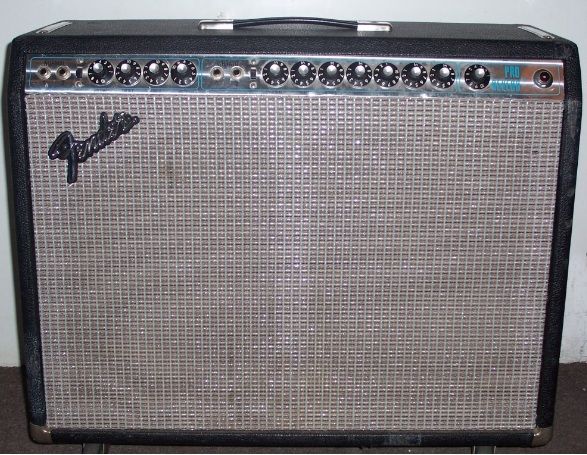
I love my '65 Fender Pro Reverb amp. It never lets me down. It's hard to play out of other amps sometimes.

- With bands doing more of everything themselves these days (recording, performing, self-promoting, etc.) and the evermore multimedia nature of the world, how much effort do you put into the visual component of your band - fashion, styling, photography, graphic/web design, etc.? Do you do these things yourself or is there someone that the band works with?

I'm a visual artist as well, so the visual component is very important to me, especially in terms of album artwork and music videos. It's important for a band to have a defined aesthetic, whatever that means to the band themselves.
- What do you find to be the most challenging aspects of the recording process? On the flipside, what aspects are the most rewarding?

There can be stressful moments when someone is trying to nail a part and it takes a while. However, it's extremely rewarding when you listen back to the song and it sounds better than it did in your head.

*****
An edited version of this recording and equipment interview can also be found at The Deli Magazine Delicious Audio site, located here:

http://audio.thedelimagazine.com/the-babies-and-the-recording-process

Wednesday, January 16, 2013

Ex Cops Interview - Shamanistic Sound Design

 
Creativity in both songwriting and sound design are the first things you notice about Brooklyn ’s Ex Cops.  With the release of their debut album “True Hallucinations,” the tandem of Brian Harding and Amalie Bruun present an eclectic collection of diverse pop styles.  Capably assisted by band members Sam Bair (drums), Leif Huckman (bass) and Kai Kennedy (guitar), the groups sound is also molded by producers Dan Shapiro and John Siket . The album opens with an under two minute percussion-and-bass-heavy, mostly instrumental piece mysteriously called “S&HSSX.”  First single “James” employs an appealing blend of keyboard pads and background vocals, set off against twangy western guitars. The lyrics reference imagery like a “broken bottle in a plastic tomb inside a darkend room,” how “there’s nothing left to steal” and “going insane on a subway train,” suggest themes about internal struggles with addiction. The album is being released by New York’s Other Music label.


 Q: You’ve chosen to title your album “True Hallucinations.” The definition of a hallucination is to see or experience something that isn’t really there, or that exists only in your mind. Yet pairing the word “true” with it implies some kind of factual basis. Is this the impression you want to convey with this title? To present these songs as a reality that appears like a dream?
 
A: I lifted the title from a book by Terence Mckenna . He goes on a bunch of shamanistic trips where he experiences visions of the future and past. Some of these things were drug induced but in his mind's eye they were completely real. I always liked the title and wanted to use it for something and this record made total sense.


Q:  The opening  track “S&HSSX” appears to include some foreign language spoken word narration. The title initials surely stand for something. Can you reveal what they are? The clacking percussive force is reminiscent of Brian Eno ’s “In Dark Trees” Have you found any influence in, or are you a fan of Mr. Eno ’s work?
 
A: If I told you what it stands for, I'd have to kill you, so no, I can't reveal what that stands for. The foreign narration is Roman Polanski who has been a big influence on me. He can't tell you what he says either.  I love Brian Eno . Here Come the Warm Jets scared the shit out of me when i was a teenager, and it still sort of does. I just saw a performance of Apollo at the WFC Wintergarden with Mike Gordon and some others and it was beautiful.

 
Q: An early release of yours (now included on the album) is the song "The Millionaire." The lyrics to it are cryptic, making one curious as to their meaning. Somehow children being a "reaction" lead to "sympathetic crimes" among other things, ultimately coming back to "remembering" the individual referenced in the song title. Though lyrics often fit together due to their rhyming qualities (and these certainly do) can you shed any light on who or what this song actually refers to?
 
A: This is something that's new to me because I wrote the lyrics in about 5 minutes, and usually when I do this they don't really mean anything, or maybe they do and I just don't care about knowing, sorta like a dream that's really fucked up but it's better just to go back to sleep and forget about it. But I'm still trying to figure this one out. I just always see a dark forest and gnomes when I hear this song. I dunno.


Q: One deeper album tracks like " Billy Pressly " come off as enthusiastic sweet pop that drives along a rolling drum pattern. With the lyrical hook expressing a sentiment to "dry your eyes," the tandem male and female vocals are processed to a television show ready sheen. Do you envision songs like this one potentially being shopped to a medium like that?
 
A: If they pay me enough, they can put it on Honey Boo Boo. But no, it wasn't the intent. This was a tough song that went back and forth between sounds, but we decided to make it pretty polished. I basically asked John (Siket) to make it sound like Dick Dale playing the Vaselines.

 
Q: "Nico Beast" is also built around an energetic drum pattern, that slowly melts back into playful vocals and other instruments moving up in the mix. While much of the track features studio enhanced, cleverly placed vocals, the song ends on a loose jammy feel, revealing the basis of what the track was initially structured on. Is this song title referencing the Velvet Underground chanteuse? As one of the least commercially pop songs on the record, do you feel it's important to show this other side to your sound, especially with the many straight pop songs included?
 
A: This was one of the first songs I ever recorded in that little room in Bushwick with Dan Shapiro . I don't remember recording this song for a number of reasons, but it was something that happened organically and I wanted to include that aspect on a record of mostly pop songs. I like that it's 2nd to last, sort of like a credits for a film and a bit of "Hey we can also do this" wink. I wasn't really thinking of Nico at the time, but I guess she was kind of a beast.


Q: Other songs on the album like “ Ken ” (driving pop with lots of vocal hooks layered in and around each other), “Seperator” (clearly defined four chord guitar progression and distinctive tambourine stroke. Rising harmonics on the chorus is powered by quickly strummed guitar shimmers) and “Spring Break (Birthday Song)” evoke the joyous innocence of early British Invasion pop, that initially took the world by storm in the early 1960’s. While another deep track “Jazz and Information” moves away from the sweeter pop, showing a more mature outlook both musically and lyrically. The addition of saxophone to the sonic mix underscores this point. Do feel all of these diverse styles can be presented to a listening audience without any confusion as to what the Ex Cops sound actually is?

A: This is something that is always a thing with me, for better or worse. I'm the dude who thinks the White Album is the best Beatles record. I have a really short attention span and I love a lot of music. I would love to be able to go in an make a Can record using the same 4 instruments and creating a totally controlled sound, but it's not me. I like to jump around and get into trouble. This album moves along in waves but it's still in the Atlantic.


This interview appears in an edited form in The Deli Magazine, Print Issue No. 33, which can be found here:

http://nyc.thedelimagazine.com/12385/deli-nyc-issue-33-people-get-read-high-high-babies-chrome-canyon-electronic-scene-nyc-more


What you should know:

Preferred band Website addresswww.facebook.com/pages/Ex-Cops/134183596643923

Origins: Kai and Sam are from Madison, WI . Leif is from CA.  Amalie is from Copenhagen . Brian is from Charlotte, North Carolina.

What it is: Devotional Tropical Goth.

For those who like: Vaselines, Beatles , Raveonettes

Relevant info: Ex Cops release their debut album “True Hallucinations” in January on Other Music Records


Equipment/Recording interview for Delicious Audio (featuring Brian Harding, Dan Shapiro and John Siket)

- How much of your recording is done at home versus in the studio?

Brian: I usually start out recording a rough track of me playing shitty drums in our practice space and layering it on Garage Band, something I've gotten a cursory grasp on. Or I'll find someone whose good at it. Our first EP was totally home recorded and I do love that warmth and weirdness, but I love combining both, which can be a rocky road, but I love records like Odelay which sounds like a bedroom recording but is like a million dollar record done by the Dust Brothers.

- If you use a studio, what do you record there and what do you record by yourself and why?

Brian: I've been in an out of studios a lot in the past 5 or 6 years, and I love recording in them. I feel totally at home in a studio and I love every single aspect of it. From playback, to smoke breaks outside, to ordering food, to staying up late doing overdubs, everything about it makes sense to me. On the other hand, recording in your room with a friend is also greatly satisfying. I guess I just like pressing the button.

- What are the pieces of equipment that you find particularly inspiring when recording at home?

Brian: I like to collect percussion stuff. I think that stuff can make a song. Like half the songs on Exile are so cool and that's because of all the weird shakers and drums they had lying around. Same for Remain in Light and a lot of Spoon records. As far as gear goes, I'll pass this to Dan and John:

John S: I'm really fond of my UREI LA3's, my API 3124 and my Lexicon 300L. Brian has a penchant for reverb, and I used the Lexicon extensively. I think you can really hear it on " James." I really like percussion as well, and I can get a bit obsessive about parts and sounds. I did a lot of tambourine and shaker overdubs with my buddy, Patrick "Taps" Guden. We used a 70's Neumann U87 for that. That mic worked well for that application. In a couple of places I used a Copperphone as a randomish drum mic--you can hear that in the breakdown of " James ." That sound was exactly what the mic picked up--no processing. It was serendipitous.

Dan: My favorite pieces of gear are my MacBook Pro and my Apogee Duet. They really allow me to keep up with Brian and get some great sounds quickly, when the songs are still coming together. This way, we spend more time creating songs, and less time trying to find the perfect snare tone.

- What one piece of hardware/software would you most like to add to your recording setup (cost not an issue)? Why?

Dan and John: I had a conversation with John about how he used to have a Fairchild 670. I would love to add that to my setup and run everything from vocals to 12-string guitar solos through it.

- Do you expect your next record to be self-produced, or would you like to work with a producer? If it’s the latter, who would you most like to produce your band, and why?

Brian: I like both. I'm a control freak and I don't love the idea of a producer deciding EVERYTHING in a little room. That being said, working with John was so rad because I could do both, and also listen to his ideas which were cool. I'd like to bust Phil Spector out though. Hope he makes it to 88.

- Do you use rack effects or guitar pedals to forge your own sound? If you do, please list the ones you use the most and let us know why you love them.

Brian: I'm pretty happy with the guitar pedals on garage band. We did 100 percent of the EP "White Women" on GarageBand pedals. I like the blue delay, the chorus, and a few others I can't think of. For the album I use Boss Delay, Boss Chorus, Holy Grail reverb, and a modified Ibanez TS-9 overdrive.

- Do you have a particular recording style that you aim for? What techniques do you employ to recreate it?

Brian: I just want it to sound as organic as possible. The moment it starts to sound to slick I have a panic attack and instantly want to fuck it up somehow.

Dan: Definitely the more organic, the better. I like to think on my feet, and adapt to whatever sound we are going for.

- Who determines the direction and style of your recordings?

  Brian: I like to think that I'm the captain, but I'm always (sort of) open to new ideas. I can get a little bombastic about it being a certain way, and I realize I have demo-itis because I've been listening to it in my head for so long in that way. But I definitely always have an idea of who or what I want it to sound like and will fight to the end to keep it.

- Is there a person outside the band that's been important in perfecting your recorded or live sound?

Brian: I mean Dan and John have obviously been super important. We still have room for live sound improvement, having only been playing for like a year, and we are looking to get a permanent sound guy for local and tour support. I can't fuck with some of these sound guys!

-What other artists would you say have had the biggest influence in your approach to recording?

Brian: I'm obsessed with the 33 1/3 books. I love Dylan 's approach and wish I could bottle up that laissez faire attitude that he had. You hear 10 different versions of Visions of Johanna and they're all good and it feels like he just picked one out of a hat. It's incredible to me. Then I'll watch the making of Rumours or Aja and it's like, oh shit, that's cool too! To be that mathematic about the process while still retaining a soul.

- Would you say that your live show informs your recording process or that your recording process informs your live show? Both? Neither?

Brian: I think, with us, the recording informs the live show. I love bands that can capture the recording in a live show. I saw Neil Young a couple years ago and was shocked at how much Old Man sounded EXACTLY like the recording. For the longest time in past projects I was lazy about live shows and I just can't do that anymore. I want it to sound great, and we have an amazing band that can do that.

- Is there a piece of equipment that you find particularly useful on stage?

Brian: I'm happiest using Fender amps. You can't go wrong with a Deluxe. And oddly enough I'm super into Roland JC-120's.


- With bands doing more of everything themselves these days (recording, performing, self-promoting, etc.) and the evermore multimedia nature of the world, how much effort do you put into the visual component of your band - fashion, styling, photography, graphic/web design, etc.? Do you do these things yourself or is there someone that the band works with?

Brian: We have PR of course, Solid Gold who are amazing. I do Twitter and Facebook. We come from backgrounds of art and fashion, so yeah, we can't not be involved with that. You look at Factory records and the amount of thought they put into visuals and aesthetics are crazy and admirable and we don't take that lightly. We have an in house photographer, Annelise Howard Phillips . We like clothes. You will never see us in cargo shorts.

- What do you find to be the most challenging aspects of the recording process? On the flipside, what aspects are the most rewarding?

Brian: Everything is a challenge, or we wouldn't be doing it. But hearing the playback on the ride home is pretty rewarding.