CromsWords

1

Wednesday, February 26, 2014

Features: The Harrow, Weyes Blood, Golden Animals, Fort Lean, Sacco, Beverly, Young Magic

The early 80’s infancy of analog sine-wave industrial synth pop is alive and well via Brooklyn’s The Harrow.


Vintage brass and flute pad textures soon give way to open note guitar chords on “To A Figure,” the opening track from their self-titled debut EP. Muted mechanized percussive thuds, reverberated snare cracks and long bass guitar pulls all point toward an affinity for the beginnings of a genre that gave us The Cure, Bauhaus and Ministry. Vocals are sung in a falsetto range and drenched in enough reverb to make Liz Fraser of the Cocteau Twins happy.


“The Fall” follows this approach even further, sounding like it could be an outtake from the Cocteau’s seminal debut album “Garlands.” “Milk and Honey” successfully combine the best elements of the aforementioned bands with a bit of Sisters Of Mercy thrown in for good measure. Its automated percussive pulse and driving bass guitar provide solid foundation for the ethereal vocals over top. While epic length track “The River” evokes a similar plaintive quality as The Cure’s “The Same Deep Water As You.”

Listen to more from The Harrow on their Bandcamp

Connect with them on their Facebook Page

As well as their Official Website

* * * * *

Playing a unique blend of quiet folk and medieval music, Natalie Mering releases her music under the name Weyes Blood (pronounced like "wise blood").


With a voice that echoes masters from the early 1960’s folk scene, Natalie's music has a soulful resonance that at times peaks in religious chanting. Traditional acoustic guitars are offset with distant rattle-chain percussion, echoed thumps and ethereal keyboards. She previously added her rare voice to notable works like Ariel Pink’s 2012 4AD release “Mature Themes,” (singing back up on the song “Early Birds of Babylon”), and she’s also accompanied the Haunted Graffiti live on tour.


Recently signed to the Mexican Summer label, Weyes Blood has a new record in the works for 2014 that promises a further evolution to her uncommon sound.

Weyes Blood on The Deli Mag by Dave Cromwell

* * * * *

Formed in Brooklyn back in 2006, Tommy Eisner (guitar/lead vocals) and Linda Beecroft (drums/backing vocals) continue to evolve their bluesy psych rock sound as Golden Animals.


With three previous recordings already under their belt, their latest full-length “Hear Eye Go” was released this past fall on Reverberation Appreciation Society, the label imprint closely associated with Austin’s Psych Fest. “All Your Life” emphasizes a big vocal chorus countered with snake charmer descending guitar line verses. “Most My Time” successfully straddles the line between Iggy and The Stooges motor city blues and Jim Morrison’s early Doors output. The accompanying video weaves disquieting images of the duo alongside bizarre amusement park footage shot while on tour in Vienna last year.


The band has joined The Black Angels and Roky Erickson for a 20 plus date U.S. tour, pairing early psychedelic innovators with present day practitioners.

Golden Animals on The Deli Mag by Dave Cromwell

* * * * *

Once known as a band that often built around heavy drum patterns, single stroked chiming guitar chords and distant synthesizers, vocal-pop band Fort Lean have released new tracks recently that show a decidedly different side.


  “Do You Remember” places emphasis on lead vocals built on top of a rhythm that draws from 50’s do-wop. “The Mall” may still keep guitars out front, however its sing along pop anthem style reigns in previous psych leanings. “Envious” is built around a hand-clap percussion pattern and soaring harmonies that seems to draw inspiration from late 60’s/early 70’s hit radio. “All The Lights” employs dramatic stops and starts, ultimately moving from slow ballad intro to a quicker paced croonercore arrangement.


Sacco is a brand new Brooklyn band that merges ambient atmospherics, relaxed drumming and diverse textural guitar flourishes with an appealing vocal style on their current dark psych track “Driving.”


Fort Lean + Sacco on The Deli Mag by Dave Cromwell

* * * * *

“Honey Do (Demo)” by Brooklyn duo Beverly presents rough-hewn guitars merged with sugary sweet vocals.

 
Iconic 90’s female-fronted dreamgaze pioneers Lush comes to mind, as creative vocal harmonies establish an appealing minor chord feel on the chorus. Discovering that scene veteran Frankie Rose is involved goes a long way in explaining the superior vocal sound. However it is relative newcomer Drew Citron who takes the lead here, exhibiting an impressive ability at capturing this classic genre.


A fuller version of the song will be included on their debut full length to be released this summer. Until then you can get this track on Kanine Records upcoming compilation “Not Violent Femmes,” which features 11 tracks from their roster of female fronted bands. To be released on Record Store Day, the comp will come on pink vinyl in a limited to 1,000 copy edition.

Beverly on The Deli Mag by Dave Cromwell

* * * * *

Indonesian born Melati Malay and Australian national Isaac Emmanuel have traveled the globe in search of musical inspiration, ending up in New York City as their home base. The sound they make together as Young Magic features ornate percussion and ethereal atmospheres.


Their debut album “Melt” (featured in Deli Issue #32 by Dave Cromwell) incorporated gentle interlocking guitars, celestial vocals, jingling percussion and drone elements. They now return with their sophomore release “Breathing Statues,” scheduled for release May 6th on Carpark Records. Debut single “Fall In” is built around an angular repeating bass pattern, as Melati’s angelic vocals float over Issac’s loose, shuffling percussion. Spacious synth textures and other mysterious studio effects contribute to a dreamlike sense of timelessness. Occasional words can be made out, but similar to genre pioneers The Cocteau Twins, the mood and feeling conveyed takes precedence over literal storytelling.


The band will play Festival NRMAL this March in Monterrey, Mexico, as well as select showcases at Austin's SXSW between March 11th and 16th.

Young Magic "Fall In" feature on The Deli Mag by Dave Cromwell

Young Magic "Melt" feature on The Deli Mag by Dave Cromwell

* * * * *

Tuesday, February 11, 2014

Sophie Ellis Bextor: Wanderlust + The Feeling: Boy Cried Wolf - Album Reviews


The last four months of 2013 saw British pop singer Sophie Ellis Bextor challenging herself in a most unexpected way. Those who’ve followed her decade and a half musical career had no prior indication she would star as a celebrity dance contestant on one of her home country’s most popular television shows. From September through December, Sophie dazzled audiences on “Strictly Come Dancing,” reaching the final 4 from an initial grouping of 15 paired contestants.


With that achievement fully in the books, time had arrived to release of her fifth studio album “Wanderlust” in January 2014. Co-written, produced and arranged by dark gothic singer-songwriter Ed Harcourt, the eleven tracks has Sophie delivering on her promise to do something completely different from her previous work. In addition to his collaborative songwriting, Harcourt played all the piano, synths, organs and samples as well as pitching in on guitar, string arrangements and backing vocals too. Richard Jones of British pop group The Feeling (and Sophie’s spouse) played all the bass parts (unless otherwise noted), with Seton Daunt contributing most of the guitars.


Immediate strains of Eastern European strings introduce opening track “Birth Of An Empire.” With Cello and violin provided by sisters Amy and Gita Langley (who’s contributions appear throughout many of the tracks) fans of classic orchestral rock like Led Zepplin’s “Kashmir” will find these cultural influences familiar. Over Harcourt’s piano structures, Sophie voice has never sounded better as she presents the imagery of national pride and its ever changing landscape. Every empire is initially begun through the birth of a single child. The legacy continues to grow as each successive generation strives to make their mark. The songs chorus vocals are full and majestic without sounding artificial. An impressive instrumental break commences as the string section, deep tom toms and familiar bass patterns come together, providing a timely bridge. Background vocals are actually placed in front of the lines “break through the web that I have spun” and “it doesn’t matter where you are when I am gone.” These vocals become even more creative on the songs outro where military style snare drumming leads into the more fluid chorus. “The pull of where you’re from is far too strong” becomes the central takeaway message.


“Until The Stars Collide” delivers on the promised live-in-the-studio feel from the advance video blogs taken during these recording sessions and shared with her fans over the past year. This is particularly noticeable in the straight forward drumming, driving harpsichord and start-stop tandem bass guitar /drum accents. “Fiction is all I’m holding on to” completes an overall literary metaphor of books used to describe an important relationship. While a clever musical reference is made to Sophie’s earlier works as the song pivots on chorus ending words “moving on.” There is a slightly warped presence to guitar chords strummed on the “everybody knows” bridge, creating a floating sensation. The title itself is sung with an angelic sheen around it, as if calling to the ghost of Emily Dickinson.


“Runaway Daydreamer” continues the emphasis on middle eastern string sections, before settling on a single electric pianos. There Sophie presents a tale of personal musing against this unencumbered musical backdrop. Live-in-the-studio drums return before the massive vocal hook emerges. Here the multilayered vocals reveal creative design, using proper recording studio techniques for the best possible results. A playful nod to the Temptations (and Rolling Stones cover of) “Just My Imagination” (running away with me) emerges. Having previously composed and recorded a song called “Me and My Imagination” on 2007’s “Trip The Light Fantastic,” a historical depth emerges from this returned to theme. The joys of a “secret escape” are extolled, sharing a theme that approaches “The Secret Life of Walter Mitty” territory.


“The Deer And The Wolf” introduce guitar as the dominant instrument, with a strong riff providing forward momentum. This track also appears to have developed out of the full band playing together, as opposed to a producer meticulously assembling looped passages. This throwback style of recording where the band is all playing together has delivered refreshingly natural sounding results. Of particular note is deep pocket driving bass guitar, especially on the bridge. The songs subject matter deals with how opposite forces in this life need each other for universal balance. Catchy sing-along hooks emerge on both the “Come away come away darling” bridge as well as the “On and on and on my love” chorus.


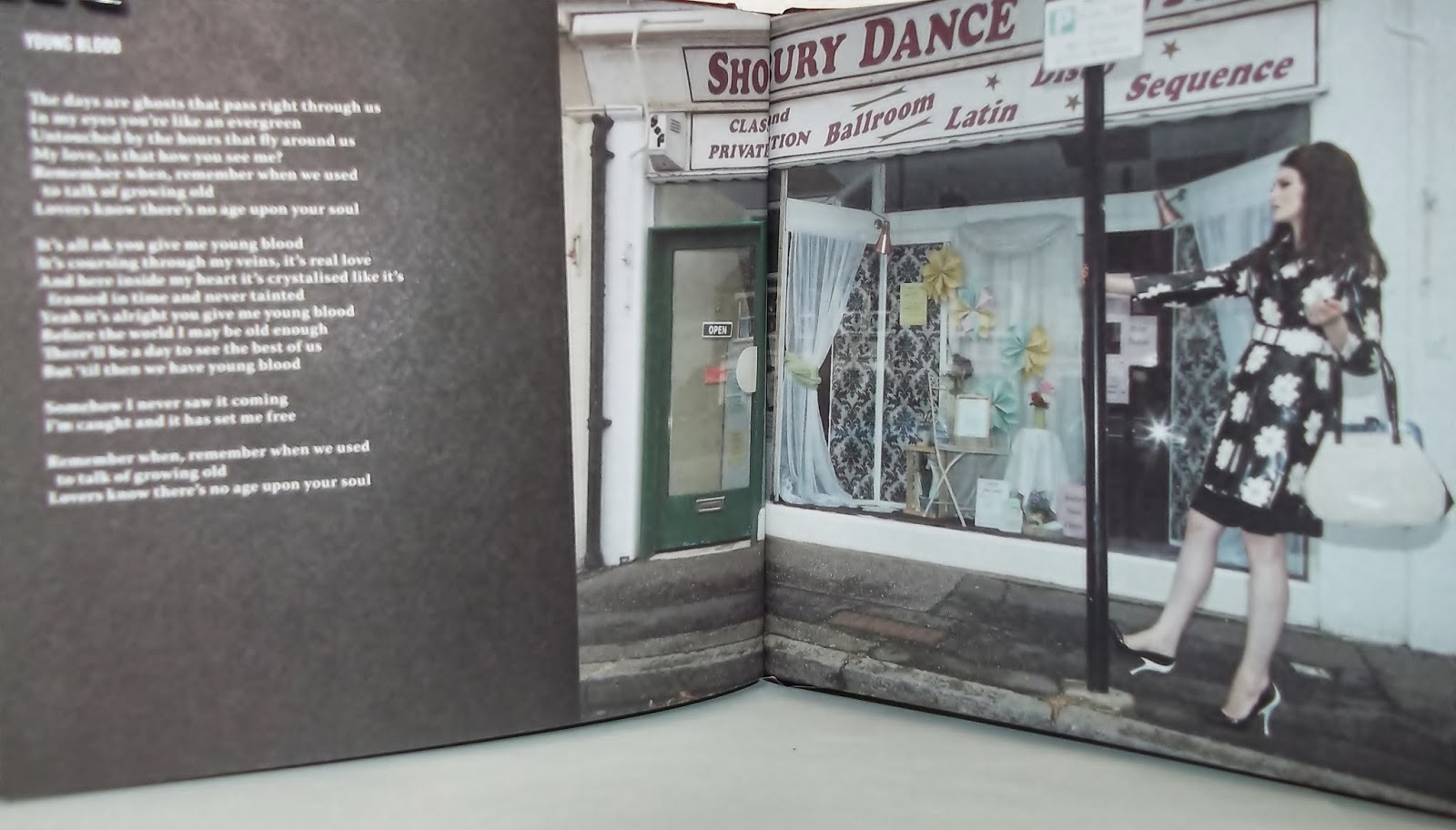
Centrally located in the tracklist order comes the first song (and first single) initially revealed from this collection, the beautiful and unfeigned “Young Blood.” With an active piano melody leading the way, percussionist Phil Wilkinson plays soft jazzy brush strokes on snare drum over Amy Langley’s deep Cello notes. The orchestral feel is completed through Arnulf Lindner’s Double Bass contributions. All of this provides the necessary sonic environment for Sophie’s lovely, heartfelt vocals. These lyrics reference how a part of you still sees the person you love as the way they originally were when you first met them. The passage of time does not really change any of that. An inquisitive question is then posed “is that how you see me?” Subtle lyrical details come in to focus, as first bridge line “Remember when” initially uses “we were the diamonds in the coal” in place of “we used to talk of growing old.” While on the melodic and thoroughly addictive chorus, the word ‘take’ replaces ‘see’ on the turnaround line “There’ll be a day to take the best of us.”


_______


Like something from a jazzy, wistful theatrical show, “Interlude” has a charmingly vintage feel to its overall production. The percussion is scratchy and lo-fi, with a dreamlike sheen enveloping the grouped-in-threes waltz timesignature. “I forget why it was” (not ‘what I was’) echoing and toying in her mind as she heads home.


Opening synth pulses chime out like a newscast bulletin on the brilliant “13 Little Dolls.” As light tom-tom percussion provides bouncy undercurrent, bright organ pierces through with tonal quality reminiscent of Sophie’s first band ‘theaudience.’ A quintessential ‘counting’ song, Sophie recites out the numbers one through thirteen with energetic charm. When listening to the count-up on headphones, the left/right panning creates a pleasurable tickling sensation in your ear. Lyrical references to ‘witches’ and ‘spirits’ place the story firmly in the Grimm fairytale mode. The psyched-out instrumental break pits distorted growling guitar against heavy tom-tom drumming and a buoyant bass pattern. Heavy guitar chords on the end out add power and punch to an already great rock song.


Employing the obvious talents of “Dirty Pretty Strings” (Gita, Rosie and Amy Langley, plus Polly Wiltshire on Viola), “Wrong Side Of The Sun” presents an extravagantly ornate mood. Strummed acoustic guitar and piano chords over a propulsive bassline soon follow in the verses as a tale of dramatic loss is told. Lyrically poetic, the vivid imagery of wishing to be a prophet and then rising phoenix exist as desire to let love grow. Praying for rain to “calm down the flames” prove futile however, as “fates weren’t on our side.” The Sun’s healing power is a theme Sophie favors, though here it is viewed from the other side. Sonically, the creative use of background voices on the bridge finds Sophie trading off with herself in a series of angelic “ahhhhhs.”


A return to the 1-2-3 waltz timesignature leads the way into the playfully twisted fable “Love Is A Camera.” Sharing a spiritual kinship with the likes of Bertolt Brecht and Kurt Weill’s “Threepenny Opera,” the literal use of camera imagery as imprisonment device is both clever and more than a bit macabre. Plucked-string harpsichord is used as a basis for this Renaissance/Baroque music piece, accurately setting the overall mood. Arnulf Lindner once again adds double (upright) bass, keeping the chamber music feel intact. Like every other song on this record, a wonderful hook emerges via the sweepingly grand “Stand still evermore, Pose for eternity with me” chorus. The image held in a tomblike monument (“centograph”) fulfills its owners need. The song’s final minute finds the pace quickening as a nursery rhyme chant repeats to fadeout.


Built upon the marching percussive representation of horse hooves, “Cry To The Beat Of The Band” presents lyrical imagery referencing “the heart of winter” and “snow falling down.” As with so much of this album, dramatic strings provide instrumental accompaniment, now further enhanced by an appearance from the world-renowned Bulgarian Choir. Sophie steps out in front of all this to deliver one more big hooky chorus, which neatly delivers the song title. Here dynamic accents emerge by way of drop down bass notes, a buzzy brass tone and boldly fundamental percussion. The story is centered around a bride who runs away on her wedding day because she couldn’t follow through on this “deceitful love.” Musical changes arrive unexpectedly, like the instrumental break featuring live-in-the-studio drumming that follows bridge lyrics “heavy is the head that wears the veil.” It’s at these moments one is once again reminded of those inside-look recording session video snippets. You could hear how Sophie and her core band kept a natural feel to the making of these songs. The proper balance has been struck between a live style environment and studio enhancements like backing vocal choirs.


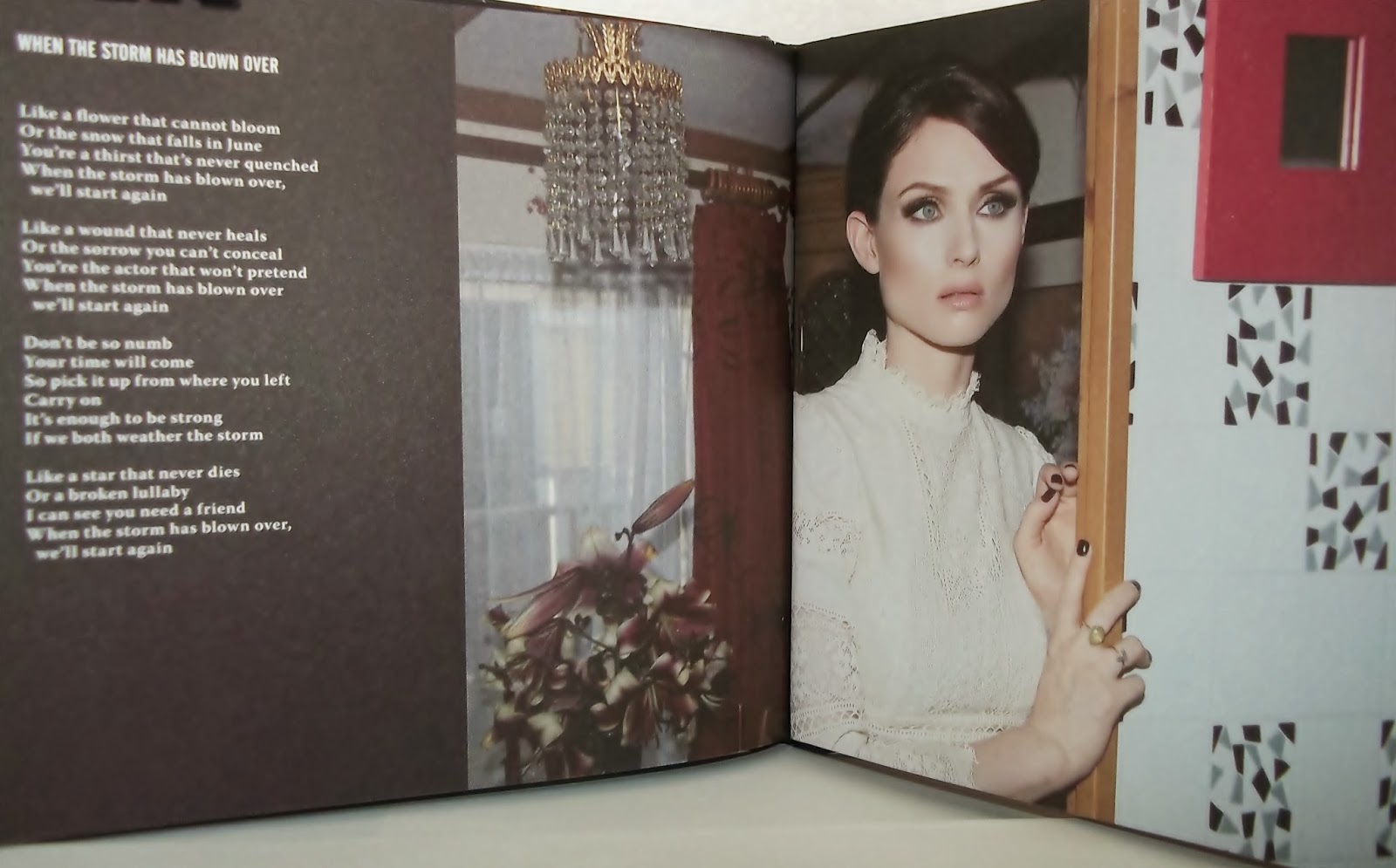
The album closes with “When The Storm Has Blown Over,” a gentle, introspective ballad that is accompanied by soft electric guitar and little else. The aftermath of conflict provides an opportunity for the willing to “start again.”

Get Wanderlust from iTunes Here

or at Amazon Here

This review is also available on the Web at My Social List Here

All things Sophie can be found here:  http://sophieellisbextor.net/

Previous features on this site about Sophie:

Make A Scene - detailed Album Review

Sophie - live in New York - June 2010

Sophie - Exclusive Interview - June 2010

* * * * *


A cursory listen to “Boy Cried Wolf,” the latest album from Britpop band The Feeling might seem initially like a collection of piano ballads from singer and lyricist Dan Gillespie-Sells. Additional plays however, reveal a myriad of rich and textured instrumental passages. These contributions from all five band members place emphasis firmly on the transformative power of words and music combined.


Scheduled for release on February 18, 2014 through BMG Chrysalis, this innovative worldwide deal for recording and publishing is a first for the band. It’s been a long journey back to the states for the group, who initially played an intimate New York show at The Mercury Lounge in 2006, followed by a bigger tour in 2007. Bearing witness to one particular performance at Webster Hall in April of that year showed just how dynamic their live show can be.


The album kicks off with “Blue Murder,” using distant conversational voices to create a cinematic feel. Piano, guitar and bass lead the way with vocals presented in a confessional manner, speaking both to a personal as well as universally relatable heartbreak. When the full band comes in on the word “cries” (as in “everybody cries blue murder”), it hits with a force that lifts the emotive power that much higher. Thematic title embedded within these lyrics, the recognition that we all at one time or another “cry wolf” becomes cathartic. “If I keep my head when others scream and shout – maybe I’ll forget my sorrows as they drown me out” shows a desire to rise above it. The band shakes things up on the outro with some particularly edgy guitar bursts from Kevin Jeremiah.


“I fear mirrors and lights – it’s been a long day,” is but one self-conscious reveal on follow-up track “Anchor.”  “I’m scared of looking behind, because we’ve come such a long way” and “holding on to a dream, you’re going to make it” may be as much of a testament to the bands history and present collective determination, than simply an ode to lost love. With the chorus invoking song title and thematic metaphor for stability (anchor) now removed - the untethered relationship is free to “sail another shore,” as touches of a traditional gospel arrangement emerge. Subsequent verses add Beatle-esque background vocals, which soften an otherwise somber point of view.


The joyously uptempo earworm single “Rescue” (seriously, try to get it out of your head after only one or two listens) is about as perfectly constructed pop song one could ever reasonably hope for. Emotional isolation is now met with a plea for help from other, because “sometimes I get lonely.” Those lyrics provide the full band its first opportunity for emphatic sonic punctuation on the word “lonely.” What immediately follows is an even bigger hook, with the lyrics “oh, oh, oh I never thought that it would be this hard – to find love.” Further revealing lyrics like “give me the will to sing again” points to those moments of self-doubt where one questions the very thing that made them who they are. Adding brass horns on the dominant hook applies a Beatles-circa-Sgt. Pepper sheen to it all. Those horns follow along on the “I really messed it up my friend” change. Other delightful sonic details can be found in a singular tambourine placed dead center in the stereo field, running through each chorus. The song culminates with an explosive blast of the word “yeah!” that delivers a tumultuous release.


“Falls Like Rains” asks if you’ll “be a saint” as “this boy needs a lick of paint” and how “all the years begin to show” pointing out that even relatively young people can feel this way. It seems that a mere 7 to 10 year cycle can trigger these concerns. With track title and overall theme speaking to the renewing power that simple rain provides to earth and seed, the hum-along hook comes by way of a mere “oh, oh-oh, oh-oh” refrain. “What was broken can be made like new” is the takeaway message of hope and redemption. The band steps out in a shining moment of instrumental bliss with keyboardist Ciaran taking a star turn of cascading piano notes that accurately recreate the musical equivalent of falling rain. The rock solid rhythm section of Paul Stewart and Richard Jones punch the accent notes, and well – “do that thing that they do.”


“A Lost Home” channels the spirit of Elton’s “Don’t Let The Sun Go Down On Me” through piano focused ballad storytelling. What’s apparent about Dan Sells appeal is his ability to write a song that is both intensely personal (“don’t look at me like that”) yet easy to relate to as it speaks to common human experiences (the ‘house vs home’ principle). The band emerges harnessing a brilliant accompaniment style reminiscent of Nigel Olsson and Dee Murray’s contributions to the aforementioned Mr. John early trio days, with a touch of Nick Mason/Roger Waters/David Gilmour Pink Floyd sprawl.


The under two minute “Hides In Your Heart” approaches near Billy Joel territory with jazz inflected piano figures, while “The Gloves Are Off” uses a boxing metaphor for romantic relationships. Busy piano structures and percussive cymbals lay the groundwork, while sinuous guitar lines emerge over bridges. The dramatic instrumental interlude gives way to an ultimately gentle fade-out.


“You’ll See” has acoustic guitar leading the way this time. There’s fearlessness here, as references to God and a rawness of emotions reveal how damaging loves “games” can be. Like nearly every other song on this album, there is a grand instrumental ending, this time enhanced by a vocal choir.


“Empty Restaurant” explores further avenues of loneliness and the crippling effect of love lost. Using an echo repeat effect on the vocal lines effectively reflects “talking all alone just to hear yourself.” The introduction of sequenced percussion patterns creates a unique undercurrent to further vocal orchestral enhancements.


“When I Look Above” opens with the sound of people’s conversations, adding an element of mystery to it all. A young boy emerges with the statement “when I look above I do not long for gods in heaven, I long for open hearts and eyes that judge on actions alone.” That statement becomes the central theme of wide eyed hope and acceptance. Of being able to “sing my song” and not caring about who else sings along. Of living life without the fear of something missing and not longing for “things I’ll never own.”


Final track “I Just Do” benefits from a studio master mix, expanding upon an “Acoustic live at The Doghouse” version originally given as a free download last summer. Where that track suggested elements of Pink Floyd “Dark Side Of The Moon” grandiosity within its compositional structure, this studio version leaves little doubt that “The Great Gig In The Sky” served at least partially as inspiration. Prominent throughout also are Kevin’s elongated guitar lines, which one could imagine David Gilmour giving a nod of recognition to. Then there are the lyrics, which show strength in the honesty of saying that “I wish I DIDN’T feel the way I do,” but – “I just do.” When Dan asks “tell me are you gonna be my friend? Because I don’t need another one of them,” it perfectly captures the need to still connect, cautioned by one too many experiences with duplicity. A “throw me in the swim” bridge and subsequent stark piano passages move the track back over into Elton John territory, before a full on march to the finish line. Once there the spirit of The Beatles “Hey Jude” emerges via background “Ahhhhh’s” and an “I Want You To Know It” repeated vocal refrain. That joyous lift captures the same vibe as Jude’s “Na Na Na Na’s.”


The band has indicated on numerous recent occasions that a return to America for a series of shows is in the works. One would expect New York to figure most prominently in these plans.

This review can also be found on My Social List, Here

For all things The Feeling, go Here http://www.thefeeling.com/

* * * * *

Thursday, January 16, 2014

Deli Mag Print Issue No. 37: Total Slacker + Azar Swan

The first significant literary event of 2014 has arrived by way of Deli Magazine Print Issue No. 37.


It is my distinct honor to have written the cover feature on one of the best rock bands out there right now - Total Slacker


With a sound built around heavy riff grooves underpinning lyrics that combine intelligence, sardonic wit and heartfelt sincerity, Brooklyn’s Total Slacker are leading the way in the next evolution of rock. Poised for a February release of their latest album “Slip Away” on Black Bell/ADA records, the quartet look to the coming year as both a continuation and new beginning for the band. Initial vision and leadership begins with core members (and couple) Tucker Rountree and Emily Oppenheimer, now bolstered by the formidable presence of guitarist David Anthony Tassy and drummer Zoe Brecher. Their sound creates the impression of familiarity, while retaining a quirky originality that prevents simple single genre designation. First single release “Sometimes You Gotta Die” takes Nirvana’s guitar tonal quality, but slows it down to an ominous, unsettling pace. The signature heavy break after lyrics “sometimes you gotta cry (and die), just to know you’re alive” is as effective as anything Black Sabbath ever accomplished throughout their entire doom-laden catalogue. The emotional power and depth is fully realized during Tucker and Tassy’s guitar outro throwdown.


Follow-up single “Keep The Ships At Bay” takes an opposite approach, as the driving rhythm lurches back and forth with a frenetic angularity. In addition to embedding the album title inside a significant lyrical hook, the message “if you can make it through night, it will be alright – make it through the day and keep the ships at bay,” illustrates how best to survive in these modern times. Compressed vocal verses coupled with a widely expanded sonic range on the chorus shows a band using the recording studio to its full potential.

The below live-in-the-studio session is up close and personal, emphasizing the high quality of songwriting and performance:


Presently the studio recording is available as a Free Download on Rolling Stone

With accompanying official video currently featured on MTV.com

None other than Paris Hilton has put her seal of approval on it, by way of Twitter


Frontman Tucker Rountree cheerfully answered my questions about his early development and where the band is now headed.

Q: Where did you grow up and go to school?

A: I was mainly raised in Salt Lake City, Utah till I was about 9. Then my parents got divorced and my mom took me all over the western half of the country. She worked as a hospital administrator, and to build her career she felt she had to move around a lot. We lived in Phoenix, Arizona, then Denver, Colorado and eventually Fresno, California. When she wanted to move again this time to Seattle, I didn’t want to so I went back to Salt Lake City to live with my dad. 

Q: Talk about your current relationship with Black Bell Records. What’s being planned?

A: We’re going to do a couple of albums for sure, and then we’ll see where it goes from there. Ayad and Ben run the label and they’re great guys. They live here in Brooklyn and are a part of everything. They come to the shows and know all the same people, so it was really logical for us to be with them. We’ve already played shows with Ayad’s band Team Spirit so we already had that kind of connection. Having this management structure with Steven Matrick and the label has helped make everything less stressful, allowing us to concentrate more on creating the music.


Q: When did you pick up the guitar? 

A: My dad started teaching me when I was about 7 years old. He’s a really eccentric guy who always wanted to play guitar and wasn’t interested trying to fit in with societies rigid standards of the time. He lived in Salt Lake and would drive to Los Angeles to shop his song demos from the early 70’s and 80’s. At the time he was at The University of Utah studying engineering and jazz composition. Both he and my grandpa, who was a jazz piano player, taught me how to play that style. If you listen closely, you can hear jazz chord inflections subtly incorporated into our music. 

Q: What about alternative tunings? Do you incorporate any of those?

A: Actually we don’t. You might think so based on the tonality of how the chord progression works out. A lot of the times the songs will start up harmonically really high and then the choruses are really low. We don’t use any alternative tunings, though. It’s completely stock. We’re not like Sonic Youth in that regard. We start high in the verses and then work our way down to a darker, lower chord progression, which sometimes can give that same kind of effect.


Q: How did Tassy come to join the band?

A: Two summers ago we went on our second tour ever, going through the great lakes areas like Chicago, Wisconsin and Minnesota for about 15 dates. We brought Night Manager with us, and Tassy was playing in that band. The second guitarist we had with us was a friend of mine who was just filling in, and not really a permanent member. At the end of the tour we heard that Tassy was leaving Night Manager so we asked him to join us. He and I have very different styles and I knew it would really work in this band. He comes from a metal background, but has also studied harmonic theory allowing him to contribute the right voicings to it all. Ever since he joined we’ve taken on a whole new life because he adds so much.

Q. What can we expect from the new album “Slip Away?”

 A: We have eleven songs on it, and I’d like to include a bonus track that is just this insane ball of experimental noise at the end. Hopefully I can get that on there as well. It comes out in February, and we’ve already released two singles for it, “Sometimes You Gotta Die” and “Keep The Ships at Bay.” The whole record is very uniform to a particular sound we’re going for. I wrote 90% of the songs on it. Emily and I arranged everything together. Then Daniel Schlett who engineered the sessions at Strange Weather Studios on Grand Avenue here in Brooklyn co-produced the record with us. It was mastered by Joe Laporta (who also did The Foo Fighters, The Killers and Vampire Weekend).

Check out the full Print Issue No. 37 Here


The whole band joined in and shared their thoughts on the Equipment and Recording process.

- How much of your recording is done at home versus in the studio?

TUCKER: Its all demo'd and arranged at home on a 4 track cassette tape studio, which focuses on the composition's minimal aspects. Then, after a lot of rehearsals we go into the studio and produce the feeling we want with that song in more or less a live - band context.

- What are the pieces of equipment that you find particularly inspiring when recording at home?

 TUCKER: i use this 1990's "DOD Stereo Flanger" that was previously Zach Condons of the band Beirut that i absolutely treasure.. and a 1980's Roland TR-505 drum machine for demos. Sometimes i use this other tape machine that Cassie Ramone gave me.

- If you use a studio, what do you record there and what do you record by yourself and why?

 TUCKER: the studio is merely a tool that polishes an already conceived body of work for us… recording at home is more like writing/ recording in real time to capture musical dimensions in their first stage.

 - What one piece of hardware/software would you most like to add to your recording setup (cost not an issue)? Why?

ZOE: it's hard because we're so used to playing live. Being put in a room with just the four of us and headphones while being recorded feels inorganic but on the flipside that made it even more rewarding that our songs still retained that "live" feel that we aim for.


- Do you expect your next record to be self-produced, or would you like to work with a producer? If it’s the latter, who would you most like to produce your band, and why?

 TUCKER: we'd like to work with Beck, Kim Gordon or Bradford Cox on a production level. Conceptually I’d really enjoy working with Jon Stearn more, he's a serious brainstormer that’s shown me a lot.

 - Do you use rack effects or guitar pedals to forge your own sound? If you do, please list the ones you use the most and let us know why you love them.

 TUCKER: B.K.Butler's Tube Drivers are the most elegant distortion I've heard, it’s a very natural distortion that is created by overdriving the 12ax7 pre-amp tube with a polarity control.

TASSY: The Rat Pedal. RAT2, It puts me in the moooooodd.

 - Do you have a particular recording style that you aim for? What techniques do you employ to recreate it?

TUCKER: I only think about what the song wants, then I think production later from what the writing brings.

EMILY: We've found that the only way to truly get a "live sound" (raucous and energetic) is to record as much of the tracks live and all at once as possible.


- Who determines the direction and style of your recordings?

 TUCKER: Mainly Emily and I… although, it all comes down to composition within song structure, and then expanding from that with the band viscerally… We can add / take away what we desire to give it that crisp feeling like, Febreze.

 - Is there a person outside the band that's been important in perfecting your recorded or live sound? 

TUCKER: For this record, Daniel James Schlett really helped the vision come into fruition.

 EMILY: Yeah, both Daniel Schlett and his partner Marc Alan Goodman gave us really great ideas for recording and layering tracks.

 - What other artists would you say have had the biggest influence in your approach to recording? Why? 

TUCKER: My dad, Phil Rountree has been home recording since the 1970's and has influenced my idea of what recording actually is. When i was like 5 i would sit on the Kitchen floor and watch him record on a TEAC reel to reel machine. He would strive for perfection, re-recording parts over and over until it crystalized the way he heard in his mind. There’s a whole albums worth of beautiful recordings he made from the 70's and 80's nobody has really heard. 

EMILY: Carlos Hernandez and Julian Fader from Ava Luna--they recorded our first album before we'd had much experience with the process as a band and we learned a lot from each other.


- Would you say that your live show informs your recording process or that your recording process informs your live show? Both? Neither?

 TUCKER: maybe both? There was a period of time where i learned and played alongside Eric Johnson on tour, and in his studio in Texas. His engineer Richard Mullen worked on my Jazz record called "Ideas" with me there when I was 23 with Leonard Cohen’s Bass player, Roscoe Beck. Richard would tell me stories of when he engineered Stevie Ray Vaughn’s albums and how they wanted to capture a "live sound", but that recording techniques and production only go so far…and it resides more in the spirit of the song and who's singing / playing it. Eric would tell me about searching for gems among our musical ideas, and that it’s a long process of taking away. I draw from those experiences but make it more of a spontaneous feeling, whether recorded or live.

 EMILY: We want our recordings to sound as live as possible.

 - Is there a piece of equipment that you find particularly useful on stage?

 TASSY: The Rat Pedal. RAT2 It puts me in the moooooodd.

 ZOE: I couldn't do anything without my 1960's 22" Zildjian ride. It has the perfect sound for our band and it's great because its thin enough that U can crash it but also maintains a nice "ping."


 - With bands doing more of everything themselves these days (recording, performing, self-promoting, etc.) and the evermore multimedia nature of the world, how much effort do you put into the visual component of your band - fashion, styling, photography, graphic/web design, etc.? Do you do these things yourself or is there someone that the band works with?

 TUCKER: Were conscious of our aesthetic and we like to play in and around that reality, but ultimately it stems from what’s happening in the music compositionally but also the 4 of us creating chemistry on stage.

 - What do you find to be the most challenging aspects of the recording process? On the flipside, what aspects are the most rewarding?

 Emily: The hardest thing about recording is fighting perfectionism, getting every little thing right so that we're happy with it but not overdoing it so that it sounds sterile. The most rewarding part is to have something that feels lasting. That we can go back and revisit and share whenever we like.

 Tucker: Exactly

Stay in touch with Total Slacker right Here

* * * * *

Emerging from the ashes of previous incarnation Religious to Damn, Zohra Atash and Joshua Strawn have spent the last year creating a compelling new sound and image as Azar Swan.


Their recently released full length album “Dance Before the War,” available from Handmade Birds Records, presents a technically modern sound that at times pays homage to the 90’s goth rock canon. Zohra’s dark, glamorous queen bee persona gives a dramatic visual focus to her cinematic lyrics and sensual vocal delivery.


In what can only be seen as the perfect complimentary scenario, Josh takes on the role of songwriting partner, record producer (creative as well as technical), live show bassist and coordinator of the music’s rich percussive element. All of that can be heard in the albums very first track “Lusty,” which is propelled by finely programmed layers of rim-clicking percussion. Zohra’s lyrics make the statement that “we hunger. We get lusty for victory.”


Additional levels of deep, descending bass synthesizer buzzes and metal-on-metal clanging touch on 80’s era first wave experimental percussive synth minimalists. “Amrika” also drives predominantly on percussive elements, multi-layered voices and measured, sparse keyboards (which approximate the sound of orchestra strings) while introducing beats that reference both afrobeat and a more middle eastern flair.


“White Violet” successfully straddles the line between dance friendly fare and Siouxsie Sioux goth cool. Plans are already in the works for their next record to be out by summer 2014 on Zoo Music. An east and west coast tour concludes 2013 with Europe planned for early summer 2014.

Josh and Zohra provided a number of insightful answers to the questions below:

Q: Do you feel that lyrically strong songs like album opener “Lusty” require more space between the background instrumentation, in order to present the story being told?

A: Zohra: I love Erik Satie because there's this beautiful space within the compositions. It's not cavernous and cold, I can see it as this twinkly piece of mesh over a flood of light. It's a hard thing to create, but sometimes I get it right. I also realized how important it is for me to let my voice tell the story, not just through words either. And to accomplish that you need to make it the star of the show. I can't be fighting a guitar line or whatever. Like I say, it's nice having a lot of colors at your disposal, but if you use them all, what you have is murky pond water.

Q: Even though your sound might be generically classified as chilly synth pop, there are elements of afrobeat and middle eastern rhythms within it. Would you also like to be known for having a world beat association?

A: Josh: Usually the stock answer is: we don't want to be classified, that's for other people to do if they want. And that's a cliche for a good reason, I don't know any good musicians who make music and have in mind what box they want to be put in. That being said, I think genres like world music and world beat sort of draw attention to the wrong place. What we are more than anything is a contemporary amalgam of influences. Everyone knows Miami Sound Machine incorporated aspects of latin music but we just think of it as pop. Dead Can Dance incorporates elements and instruments from all sorts of different cultures, it's thought of as gothic. The Knife use steel drum sounds, it doesn't mean they are calypso.

Zohra: No. I don't see things that way. Using sounds that aren't endemically "western" comes only from a place of not giving a shit where anything comes from. If I like a sound, I'm going to use it.


Q: Album title track “Dance Before The War” features arguably the most passionate vocal performance on the record. It seems the name Kate Bush is mentioned in almost every feature on you. Is she as much of an influence and role model as assumed? Or is it simply a coincidental occurrence of having a similar vocal timbre?

A: Zohra: The truth is nobody noticed the artists I do rip off because of the endless fascination with Kate Bush vs anyone with tits and a range. The ultimate red herring, thanks Kate. In all seriousness, Kate Bush is in my heart and very present in my musical DNA along with scores of other amazing men and women. I think a lot of folks could really use a widening of their women in music lexicons.

Q: Could you envision a big name dance producer like Armin van Buuren or Skrillex applying their formidable (if somewhat predictable) touch to one of your tracks via a remix? Would you be OK with that kind of input?

A: Josh: There are all sorts of bigger name dance, pop, and hip hop producers I'd be honored and happy to work with or have remix our stuff. I'm not personally a fan of either of those mentioned but that's just because I haven't really heard much of their stuff, but I love Mike Dean, Clams Casino, Future, Kanye West, Mike Will, Emile Haynie, Stargate. I think maybe in the realm you're talking about I could go as far as maybe Calvin Harris.

Q: There are elements on the album that share similarities with 80’s and 90’s goth rockers like The Cure, Bauhaus and New Order. At what point in the sound design process do you decide choose the sonic direction of the song?

A: Zohra: I bring songs to Josh in different stage of formation, usually with ideas of sonic qualities that we use as the backbone. The essence of the work is there from the onset, the tracks aren't built from melody lines I write, I come with riffs and raw beats etc, Josh helps fill in the colors and dynamics.

Josh: It varies from song to song. It's often a combination of the initial vision Zohra has for the song while she's writing the demos, then I'll then start making suggestions, trying to walk the line between maintaining her vision but maybe adding some things from my imagination that she might not think of.

Q: Is the name Azar Swan an anagram of sorts, of the both of your names?

A: Zohra: Yes! One of the myriad of reasons I chose the name.

Josh: Good band names should continually re-reveal themselves to you. This one has been good for that.


An excerpt of this interview can be found in the Print Issue of Del Mag No. 37 Here

and directly on the Deli Website Here


EQUIPMENT/RECORDING INTERVIEW

- How much of your recording is done at home versus in the studio?

100% of the recording is done at home.

- What are the pieces of equipment that you find particularly inspiring when recording at home?

The Akai MPD 18 is probably the most inspiring piece of equipment. When you use it instead of a keyboard MIDI controller, it changes both your approach to playing and the sounds themselves are articulated differently by the pads as opposed to a keyboard MIDI controller.

  - What one piece of hardware/software would you most like to add to your recording setup (cost not an issue)? Why?

A vintage Prophet. It's just one of the greatest analogue synths, used on so many of our favorite records. Zohra and I are always sending each other videos and freaking out like "They used a Prophet, too, that sound is a Prophet!" From Genesis to Japan.


- Do you expect your next record to be self-produced, or would you like to work with a producer? If it’s the latter, who would you most like to produce your band, and why?

I sort of feel like my "instrument" in Azar Swan is production. So in a sense, we are always and will likely always be "self-produced." That doesn't mean I would never defer to or collaborate with a producer whose work I love. Mike Dean would probably be my top pick for someone to work with this band. Don't get me wrong, Kanye West is a great producer himself, but when I look at the credits on Watch the Throne, My Beautiful Dark Twisted Fantasy, The Geto Boys records, the Kid Cudi records, it's his name that's consistent on the tracks I love.

- Do you use rack effects or guitar pedals to forge your own sound? If you do, please list the ones you use the most and why you love them.

All the effects on my end are from Logic. On the mixing side, Mike Dextro probably adds all kinds of bells and whistles but I'm not familiar with what they are.

- Do you have a particular recording style that you aim for? What techniques do you employ to recreate it?

All recording is just finding the sounds that get YOU turned on. Turn the knob til it sounds the way you want it to. If that button isn't working, push another one. It's not that complicated, and I think while techniques can most definitely be learned, it's really just about developing your ear. Because all a technique is in the first place is something that sounded good to someone. Most of the best producers, I feel pretty sure, whatever makes them special is just something they discovered in the course of trying things.


- Who determines the direction and style of your recordings?

Of the recordings? That's actually an interesting question. Zohra is the queen bee of Azar Swan so she has veto power, but it's mostly my vision on the production side, with Mike's mix work playing a huge role in fully realizing that vision. Zohra and I talk and conceive and conceptualize to a certain degree. Once it's all said and done it's hard to say whose idea was whose. But the fundamental approach--which is basically making music with contemporary radio production values that's not the sort of music that generally gets made with contemporary radio production values--that's sort of my fundamental concept and approach. At least for right now.

- Is there a person outside the band that's been important in perfecting your recorded or live sound?

Mike Dextro, our mixer, easy. He may as well be a band member. He knows what we're going for, I told him from the start that I wanted these tracks to sound like they could be on the radio. He's done a killer job of making them sound like that. Some friends of mine DJ hip hop and pop and they mix in Azar Swan and it works well. I'm really proud of how it all mixes in. Mike definitely deserves a lot of credit for that--understanding what those production values are, and how to take what I've made and give it that sheen on the mix end of things.


- What other artists would you say have had the biggest influence in your approach to recording? Why?

Our approach to recording is so completely basic, the answer to that would have to be a punk band or something. We are not experts with this equipment. 'Dance Before the War' is the first all electronic record I've ever made. We got the equipment we could afford and that we could understand and we made it work for us. I read somewhere once (I don't know if it's true) that the reason Depeche Mode originally decided to play synths was so they could practice on headphones quietly. There's an element of that with Azar Swan, where choices made out of utility and necessity ended up having aesthetic impact. Because Religious to Damn (our previous band/incarnation) was practically orchestral at times. We were just unable to logistically coordinate the instruments, the players, the venues and sound systems to handle what we were trying to do. This approach allowed us to create a big sound that relied on nobody and could fit anywhere.

- Would you say that your live show informs your recording process or that your recording process informs your live show? Both? Neither?

Definitely the recording informs the live show. Although that doesn't have the same effect on us as it has on a lot of bands. We create a lot of sounds electronically that feel different when played live. I think our records are like dance pop, but our live performances--especially when we have two drummers with us on stage--is more like a tribal electronic war ritual.


- Is there a piece of equipment that you find particularly useful on stage?

The Arturia MiniBrute has proven to be a nice addition to our live arsenal. A lot of what we do live has to do with augmenting what's already on the record, taking the drums and bass to levels you simply can't get with recording. In other words, when you work with as much heavy tom drums and low subs as we do, a mixer can't make all that equally loud and keep the attack. You make sacrifices in the recording, whereas live you sort of can just go full on. The MiniBrute lets me compliment some of the more brutal and noisy synth textures.

  - With bands doing more of everything themselves these days (recording, performing, self-promoting, etc.) and the evermore multimedia nature of the world, how much effort do you put into the visual component of your band - fashion, styling, photography, graphic/web design, etc.? Do you do these things yourself or is there someone that the band works with?

We've done it ourselves and we've worked with others. It's generally a combination. Sometimes you find that if you want to get something done you have to do it yourself, other times you find that you really need the expertise of someone else. Visually, working with Shaun Durkan (of the postpunk band Weekend) has been a dream. As a visual artist and graphic designer he's amazing. We have definitely dabbled in the fashion stuff, our former label Pendu Sound was really into articulating a certain philosophy through both music and fashion. That was cool, but recently we've been conceptualizing most everything ourselves and finding people to help on the technical side. I think we're the most DIY we've ever been in certain ways.
 
  
- What do you find to be the most challenging aspects of the recording process? On the flipside, what aspects are the most rewarding?

The most challenging thing for me is just finding the time. The most rewarding thing is setting out to make something, and in the process of making it, having it turn into something you didn't expect. Something you like more than the thing you were setting out to make. That's the best, it's like a high.

Find out additional information on Azar Swan Here and Here

* * * * *