Now in 2019 the time has come for Sophie to look back on her storied career and celebrate it with her greatest hits album “The Song Diaries.” Not content to simply cobble together a collection of the already recorded tracks that typically constitutes a “greatest hits” album, Sophie embarked on a bold journey of re-recording every song from scratch and placing them in an orchestral setting. That ambitious undertaking resulted in 15 chronological order hits spanning from the very first solo single through all six of her studio albums (this now being her seventh) along with four bonus tracks encompassing significant historical reference points and/or enhanced alternate takes.
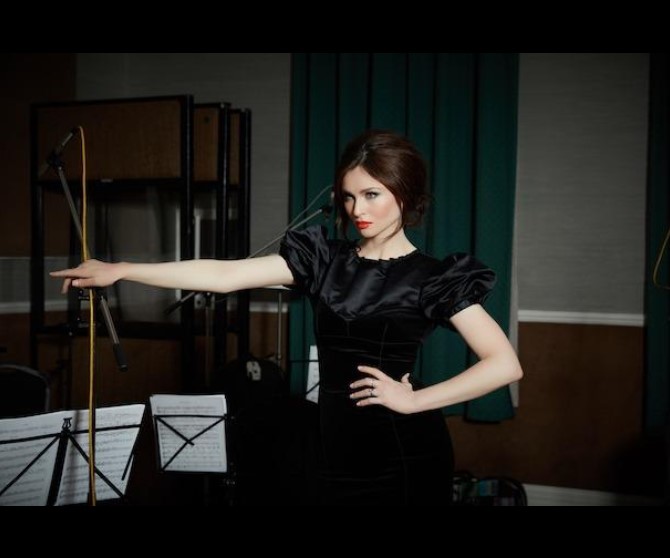
Once again enlisting the services of Ed Harcourt on production (along with husband/bassist Richard Jones and David Arnold), the Amy Langley lead string section (once dubbed the "Dirty Pretty Strings") provided the bulk of instrumentation and arrangements.

Opening the record with her very first massive hit single (a collaboration with DJ Cristiano Spiller), “Groovejet” (Orchestral Version) places immediate emphasis on Amy Langley's string section and deep toned kettledrum punctuation. Sophie's original lyrics (she's always been a prolific lyricist) commence after just 15 seconds of intro (it was :25 on the original) with the familiar lines “Holding you closer, it's time that I told you, everything’s going to be fine. Know that you need it, and try to believe it, take me one step at a time.” The newly recorded vocals (we are talking 19 years later, people) display a warmer, more intimate style of phrasing (a richness borne no doubt from singing it live for that many years – and truly owning it) while retaining the sweetness of the original. Arriving at the “hook” that locked down it's number one position in the UK, New Zealand, Ireland and Australia, (as well as charting at number three on the American Hot Dance Chart), that original Sophie lyric "And so it goes... how does it feel so good?" subtly reworked by co-writer Rob Davis as "If this ain't love... why does it feel so good?" now comes with backing enhancements of flutes, trumpets and the propulsive rhythmic string section. The pivotal bridge section “will you remember me boy? Remember me loving you” benefits from brightly descending violins and a more passionate vocal rendition (complete with trailing “ooooh ooooh's) than on the original. The final minute places further emphasis Sophie's fuller reading of the words she originally wrote, now re-imagined in a symphonic setting. Trimming nearly a half a minute off the original (with extended mixes going much longer) has the track clocking in at a precise 3:20.

Seventeen seconds of rising violin melody and bass-cello counterpoint introduce the orchestral remake of Sophie's first completely solo single release, “Take Me Home.” Although technically a cover of Cher's 1979 US hit version, Sophie (ever the creative writer) had reworked and added her own lyrics to to the August, 2001 first single release off of her stunningly successful debut album “Read My Lips.” Her brand new vocal performance here is a thing of beauty, eliciting once again the sensation of warm invitation initially experienced on listening to the original recording. Subtle changes emerge via added flutes and echo-response background vocals. Certainly the years of performing this song frequently has aided in her current nuanced delivery. Not surprising as we all improve our skills over time (when one puts their mind to it), and there is no doubt that Sophie sings better now than she ever has. It's also a magnificent composition, and kudos to the original writers Bob Esty, Michele Aller for giving their blessing (and more importantly, permission) allowing Sophie to rework this song as her own. The fact that Cher objected to Sophie's version (but had no say in the matter since she wrote none of it), finding the additional lyrics “too overtly sexual” is hilarious (and rather hypocritical) when viewing THIS performance of the song. Further, Sophie's more impassioned vocals here just might be a subconscious (over time) reaction to critics who snarkily described the original vocals as singing “with the breathless detachment of someone getting a massage from a lumberjack” and as a "pleasant enough song", though the (original) production and vocals "more tired than sexy.” A nice touch is delivered at the end of this new version with those tinkling, descending melody lines re-imagining what was on the original. Clocking in at 4:23, Sophie has no problem pushing song lengths, with 6 of the 19 tracks all going beyond four minutes.

Choosing to collaborate with American songwriter Gregg Alexander proved to be a brilliant move on Sophie's part as it produced her biggest song of all with the international hit “Murder On The Dancefloor.” In fact the song is reported to have been the most played song in Europe in 2002. Would love to learn more about how Sophie and Gregg came together for this one. Making a name for himself in his teen years (much like Sophie did with her first band TheAudience) Alexander scored an international hit with his band The New Radicals and the song “You Get What You Give” in 1998 before quitting the performing side to focus solely on songwriting and production in 1999. This would lead to a perfect partnership with Sophie and the creation of her all time signature song. This latest recording finds Sophie infusing the same level of playful joy in her vocal performance that made the original so appealing. Having a bit of fun with what could be seen as a “dark theme” (we ARE talking about “murder” here) and weaving in clever word play (“you better not kill the groove”) instead. Sparsely plucked strings behind the verses allow the vocals to stand front and center, where the improbably successful “and so and so and so and so” lines continue to satisfy after all these years. Reaching the chorus that has delighted now for nearly two decades, clever use of castanets dropped into the space where Sophie's “foot stomps” occurred in the video, (which became the preferred audio version of choice) is just one delightful percussive touch added to this orchestral version. Second time through finds the plucking strings moving in double time behind the verse. A chugging percussive pulse emerges behind the second chorus, giving it all an almost American Western feel (like something out of a 70's Clint Eastwood movie – which were actually made in Italy – but that's another story entirely). Adding to that feel is a Spanish guitar interlude that emerges as a surprising addition to something dubbed “orchestral.” Sophie's vocal performance here is light and airy with a playful quality overall.

The next “Read My Lips” single Sophie chose to go with was a slight curve, selecting “Move This Mountain” (which was a UK only double-A release in June 2002) instead of the rest-of-the-world release “Get Over You.” That choice, however becomes more clearer when applied to the current orchestral setting, where it makes more sense. A single bell chime (like what you would hear in a town square) and deep, reverent strings intro this latest version. Sophie's lyrical reading takes on a more earnest, questioning (and confessional) approach. Much like the original, however, all of that is put aside for the confident, can-do chorus that states “I can do anything that's put beside of you, and I can move any mountains that you make. I'll lift you up and my back will never break, and I can move this mountain.” Deeper cello tones dominate the sonic palette underneath verse lines, making way for uplifting violin enhancements on the bridge “Oh, do you know? I would have done anything for you.” Dramatically dropping out for the unencumbered “take this chance, I won't repeat this” line. Somber vocal choirs fill in behind the second chorus, giving this new rendition a similar feel to the work done on her “Russian” album (“Wanderlust”).

Working once again with co-songwriters Gregg Alexander and Matt Rowe, Sophie delivered her fourth and final single from debut solo album “Read My Lips,” the uplifting “Music Gets The Best Of Me.” Returning to deep and bassy cello's on the intro for this updated recording, Sophie's vocal line matches the original until an additional voice backs the word (and enunciation) “stron-ong.” Sweeter violins accompany a chorus which also benefits from in-tandem backing vocals. The second verse comes similarly situated, now with the vocally extended keyword “star-art” receiving emphasis. A delicate touch of violins provides a rising (then falling) hook in between chorus lines “music gets the best of me” and “guess who gets the rest of me.” Angelic plucked harp strings emerge as the surprise instrumental accompaniment behind the bridge that goes “Oh, my baby, you know you make me smile. But it's the music we're making, that's really driving me wild.” Where that last word on the original was boldly sung out in high volume, this orchestral version has the word “wiiiiild” delivered soft and gently, against delicate strings. Further lines “I can't help it baby (Come on, come on, come on, come on)” are echoed through actively enmeshed string movements.

Moving on to the always more challenging second album “Shoot From The Hip,” Sophie includes just one song from this collection, it's first single “Mixed Up World.” Choosing one more time to team with the songwriting team of Alexander and Rowe, Sophie weaves a tale of confusion and frankly, depression – before reminding herself that's she's actually tough enough to handle it. This orchestral version leans heavily on a classical music vibe, with trumpets providing hooky “licks” that usually are played on guitar. Sophie's vocal performance is rich and vibrant, delivering those warm textures that initially captivated on the original. The necessary call-and-response backing vocals are there on the pre-chorus, imploring “don't cry,” “stay high,” and “don't hide.” The chorus comes complete with appropriate matching backing vocals and soaring violin melody lines over top. Original track melody lines are also accurately reconstructed via chugging strings and precisely placed trumpets. A rising, swirling orchestral uplift accompanies the “don't wanna hurt no one” end-out.

Selecting now from her third album, 2007's “Trip the Light Fantastic,” the debut single “Catch You” is certainly worthy of “greatest hits” designation and inclusion here as an orchestral remake. A rare single of Sophie's where she was not involved in any of the songwriting. Her label at the time – Fascination – and/or her management team, enlisted another former pop-star hitmaker in Cathy Dennis to compose this song for Sophie, with capable assistance from producer Greg Kurstin and additional songwriter Rhys Barker. The original track peaked at No. 8 on the UK Singles Chart. Chugging, Beatles-esque (circa “Eleanor Rigby”) cello strings provide the introductory rhythm on this latest version. Sophie's impeccable diction stands out even more now against this string background, as she re-tells this fictional tale of romantic surveillance. Reaching the chorus (and hook) of “Run to where you want, run to where you want, I am gonna find you. There ain't no distance far enough, my love's gonna find you,” has the chugging cellos dropping out for sweeter, higher-register strings that soften the somewhat stalkerish nature of the verses. Subtle instrumental touches like distant cymbal woooshes and French Horns add pleasing textures on subsequent choruses. The bridge that begins “why waste your energy?” comes recited over fluttering, angelic harps, allowing Sophie to inject a more affectionate delivery of these lyrics. Reaching an emotional peak with Sophie's inherent sweetness shining through on the lyrics “let your heart surrender to your destiny (where “destiny” is sung both softly (the first half of the word) and full throat-ed (the back half). These are the moments that encapsulate Sophie's enduring appeal. The ability to take *one word* and infuse it with both her positive outlook personality and impressive vocal skills.

The second single release from “Trip” saw Sophie back in her familiar co-songwriter territory, this time collaborating with another hitmaker and vocalist Hannah Robinson (who was responsible with producer/songwriter Richard X on a particular fave - “Some Girls” - a big hit for Rachel Stevens in 2004) on “Me and My Imagination.” Hannah appeared to be the perfect foil for Sophie, going on to co-write many other excellent songs with her and providing backing vocals as well. Producer Matt Prime also shares songwriting credit on this song, which reached No. 23 on the UK Singles Chart. This new orchestral version serves up the melody via pizzicato plucked strings alternating with extended note violins. The lyrical story of needing coy games to remain interested in the “romantic dance” (e.g. - popular girls problems) is delivered via a syncopated, counterpoint rhythm between voice and backing instrumentation. The chorus is more straightforward with the instructions of “try to keep me entertained” and to “make it hard for me” which is almost jaded when reading the words as written. It's the literal opposite of Billy Joel's classic song (I Love You) “Just the Way You Are” which states “I don't want clever conversation, I never want to work that hard.” However, Sophie sweet rendition and cheerful delivery turns something that could be misconstrued as coming from someone who constantly needs to be “entertained” it into something far more benign.

The third and final single released from 'Trip' was the hauntingly beautiful “Today the Sun's on Us.” As a single release, this was Sophie ever so gently attempting to broaden the scope of how she would be perceived. A gorgeous ballad with actual *sincere* lyrics, it was risk taking that would be a harbinger of things to come (many more ballads and in fact, the premise on how *this current* album was made). While the verses merely exist to set the story in motion, the bridge and chorus are what sends chills up and down your arms. Because embedded in those two sections are fantastic melodies and true emotionally charged lyrics that rise to the point of, well “magic” (what Sophie was seeking on the demanding “Me and My Imagination,” but actually achieving here in this more honest awareness). With a tandem voice behind her on this chorus of this new version, insightful statements “don't you fear, what will come” because “right NOW – we're in the sun.” Things are good. Maybe even great. Stop worrying about all the little awful things that COULD (and frequently do) happen. “Don't let *today* get lost." There will be plenty of real trouble that happens, and you'll be forced to deal with it. When things are going good – enjoy that moment. Kudos to Sophie for her unique diction on the words “fear” and “what” (back to back in the second chorus). Those little details are what makes SEB unique and an artist like no other. A gentle rendition of the bridge section that concludes with the simple question “will you be by my side through it all?” ushers in a perfectly understated pizzicato string arrangement. Inventive “ahhh ahhh” background vocals and counterpoint choir take this near-perfect song to conclusion. Co-songwriters Steve Robson and Nina Woodford deserve special mention and kudos for assisting Sophie in bringing this vision to life.
Moving on to her fourth studio album “Make A Scene,” first single “Heartbreak (Make Me A Dancer)” emerged as a dual release between Sophie and English production duo The Freemasons (James Wiltshire and Russell Smalls). Songwriting credits were shared equally between all three as well as the inclusion of Richard ("Biffco") Stannard. It was a pretty successful hit for each of the separate artists albums, with some decent play in the USA. Reaching No. 1 on the MTV Dance Chart, it remained there for 13 consecutive weeks. Additionally, Sophie actually performed the song live (along with others) in New York with The Freemasons, and one lucky writer was able to chronicle that event here. This latest orchestral version employs the lushest string arrangement yet on this new album. Replacing the electro-pop nature of the original, a far more dramatic reading is given to this lyrical content. Higher register violins and fluttering harps provide the predominant musical accompaniment, allowing for vocal emphasis in other places this time around (“And – with – each – step! - - I – will – for-get”). The climactic instrumental rise leading into the final chorus builds to an explosive conclusion.

Another dance floor success and third single from Make A Scene selected for an orchestral remake (and greatest hit designation) is the wonderful “Bittersweet.” Adding Hannah Robinson again to the songwriting team (which included the three others who helped shape “Heartbreak”) succeeded once again in creating a universal theme most anyone could relate to. All relationships it would seem, have some 'bittersweet' elements to them. As one might anticipate, the orchestral elements are less propulsive, providing an almost melancholy counterpoint under Sophie's vocals. After the second chorus on this new version Sophie immediately (without any break at all) seques into her “oh, woah, whoah, woah – so here I am” bridge section. This overall more solemn reading of what was originally an (obviously) more boisterous dance song doesn't really temper (much) the physical references of the it's lyrics. Name-checking “desire” and “craving the heat” there is a level of “body curiosity” that leans more towards “sweet” than anything “bitter.”

Completing the “Make A Scene” triumvirate for this album, Sophie includes her fourth single release that year “Not Giving Up on Love.” Designed as a collaboration with Dutch Producer/DJ Armin Van Burren and co-written with Australian sisters Olivia and Miriam Nervo, it is the lyrical sentiment that has stood the test of time. The you-and-me-united-in-this-world theme - “just the two of us" creates an emotionally powerful narrative. "And if it all falls down," well, it just doesn't matter. "Nothing else matters" because "I know were strong enough," and I'm also not going to quit on us. A delicate approach is taken with the orchestral violins woven around Sophie's opening verse. That similar lighter touch is also applied on the choruses, opting for a more wistful approach as opposed to the boldness of the original. As the song progresses, the intensity rises on both the orchestral elements and Sophie's vocal presentation. A final half minute of gentle violins provide a delicate ending coda.

Moving on to her fifth studio album “Wanderlust” (which could also be called her “Russian album”), lead single “Young Blood” was the first song establishing her next stylistic phase (as a more mature, Adele-esque vocalist) and beginning the Ed Harcourt co-songwriting and production partnership. In fact you could pinpoint this song as the genesis for the style of this current album. It served as a “comeback success” of sorts for Sophie as it was her first single to enter the UK Singles Chart since 2011's “Bittersweet.” It peaked at No. 34 on the UK Singles Chart (spending three weeks there) and at No. 3 on the UK Indie Chart, making it her fifteenth best-selling song in her home country. This current orchestral version employs an oboe as the initial dominant melody source. A wistfulness is felt in Sophie's vocal presentation, as violins churn earnestly behind. Looking back at the passage of time spent together is “all okay” because of what is continually shared each day. It's like the ending storyline in the film “Inception” - where the central couple (DiCaprio's “Cobb” and Marion Cotillard's “Mal”) spend 50 happy years together – three levels down in their dreamworld. The dramatic pause in this current version – just after the final line of “there'll be a day to take the best of us” provides a nice touch, that ultimately leads to that opening oboe returning as outro bookend.

One more from the “Wanderlust” SEB/Harcourt team, “Love Is a Camera” served as the third single off that album. Presented to hot adult contemporary radio in the UK, it reached No. 32 on the UK Indie Singles Chart. It's 1-2-3 waltz time signature appears a perfect match for an orchestral setting, with strings and oboe providing counterpoint and melody, respectively. Lyrically one of Sophie's more literary (and literal) works, the tale of camera imagery as imprisonment device is both clever and more than a bit macabre. That wonderful hook still dazzles, via the sweepingly grand “Stand still evermore, Pose for eternity with me” chorus. The power in this version comes from Sophie's commitment to and narration of this elaborate story. The image held in a tomb-like monument (“centograph”) fulfills its owners need. Her final two recitations of the word “memories” are both different from the original version and from each other. That changes the overall tone to something far less sinister, adding warmth. The final :40 seconds is allotted to a climactic orchestral denouement.

Selecting one track from her sixth studio album “Familia” (which could also be called her “Mexican album”) and second consecutive partnership with Ed Harcourt, third single release “Wild Forever” earned this orchestral re-arrangement treatment. Somber strings and tender piano convert this former bubbling pop tune into a more ardent revision. Those three sharp descending notes associated with chorus lyrics “we shouldn’t fight the way we feel” and the three before “when it comes from somewhere real” are now delivered by tandem violins. Sophie delightfully still goes falsetto on the line “a garden always in full bloom.” The joyously repeated chant of "we just have to surrender" justifiably remains, however eliminated now are the background vocals “Runnin' wild,” and “Wild forever”) on the final chorus. A single trumpet provides perfect accompaniment along with strings on the “we just have to surrender (we know, we know)” end-out mantra.

Including a bonus track taking Sophie back to her very beginning as a recording artist, the Billy (Paul) Reeves penned “A Pessimist Is Never Disappointed” serves as an acknowledgement to her earliest days. As the 19 year old lead vocalist (and image) of britpot band Theaudience, this third single release from that bands debut album peaked on the UK Singles Chart at No. 27. Sophie has been performing this song from time-to-time over the years at live shows, so it made sense to include it here as an orchestral remake. Low note cellos and pizzicato plucked strings introduce the sonic entry point for this updated version. Sophie's rendition here is note perfect, including all the “charm” alluded to in these almost too-sophisticated-for-pop music lyrics. Reeves was certainly a gifted songwriter and one wonders what he could have accomplished if he had gone as hard at it as, say someone like Gregg Alexander (or for that matter, Sophie herself) has. Nevertheless, THIS song is still a marvel after all these years, and would have been the perfect lead song to any of the numerous “coming of age” Hollywood movies that have come out over the last 20 years.

Moving away from the entirely orchestral offerings, Sophie steps back to 1977's disco-soul era and covers the Carol Williams hit “Love Is You.” That original track, in fact, was sampled by DJ Spiller and served as the instrumental bedrock around which their first hit together “Groovejet (If This Ain't Love)” was centered on. Written by Vince Montana Jr. and Ronnie Walker, Williams provided the vocals for the Salsoul Orchestra and similarly named record label. Sophie's version adds hammering snare drum to the percolating percussion that provides the songs rhythmic sway. Along with the swirling strings that typified the soulful disco of that period, funky guitar textures mirror a sound heard on both the original “Groovejet” as well as “Murder On The Dancefloor.” In the early 2000's Sophie clearly knew the sound she was going for. The current track features warm vibrato vocals that instantly make it less cover and more all her own. Most impressionable lyric: “cause you touched me - and I saw - God's own heaven.” An elegant trumpet interlude leads to full chorus background vocals.

Offering two additional Bonus Tracks, “Take Me Home (Orchestral Disco Version)” offers up an alternate version with added percussion and chunky-funky guitar in it. The bass-line now figures more prominently on this go-round, providing that “disco” feel advertised in the title. Background singers dive into the fray, supplying call-and-response echoes of Sophie's repeated offer (and title line). “It's only fair I get my way” and “it's gonna happen anyway” - we hope! “Don't pahahaaas me byyyyyyy” - as if! The bass guitar really steps up under the “let's make a move – let's leave this world behind” segment. Additionally, a wah-wah guitar break ushers in the bridge that goes “in this moment, one night with you – all alone, with nothing to lose.” A singular tasty guitar lick emerges, riding this one out to it's conclusion.

The final Bonus Track (and final track overall in the sequential Spotify playlist) revisits “Murder on the Dancefloor” only this time with an “Orchestra Disco Version.” There's no immediate “disco” heard on the opening strains, however, as violins in both low and higher register slowly emerge into the audio field. A distant vocal chorus breathlessly declaring “Mur-dah!” enters the mix as Sophie recites those memorable opening lines. “Disco” is quickly achieved, however by adding a 4 on the floor pulse beat underneath those sparsely plucked strings behind the verses. Also new to this version are rhythmic high-hat cymbal strokes on the delightful “if you think you're getting away” pre-chorus. The traditional drum set emerges further on the full chorus, providing more solid propulsion under those castanets that enhanced the first orchestral version. It feels like a bass guitar may also be ever-so-subtly anchoring the song now as the track proceeds forward. Those additional bass guitar notes are placed with minimal efficiency, carefully preserving the overall orchestral feel. When the Spanish guitar interlude hits, it feels all the more startling, as beats drop out momentary, before kicking back in with that obligatory dance-floor heartbeat.
All songs copyright EBGB's LLP under exclusive license to Cooking Vinyl Limited

This album can be acquired and experienced via all the latest ways shown above and access to those choices can be found via this single handy link.
* * *

Follow Sophie on Social Media:
Instagram:
https://www.instagram.com/sophieellisbextor/
Twitter: https://twitter.com/SophieEB
Tumblr: http://sophieellisbextor.net
* * *
Previous features on this site about Sophie:
* * * * *