Compelling new releases kick-off the Fall/AutumnDaveCromwellWrites music review feature. Long-time indie-legend dreampop recording artists share space here with newer experimental ambient creators, and post-gaze, power-pop psych-rockers. Deep dives are the order of the day, with an attentive ear for sonic details still the primary focus. Audio, photos and video continue to provide the inspiration for this careful analysis.
We American's who haven't been afforded the luxury of traveling abroad and traversing the globe occasionally are unsure of exactly where certain country's are. Take Estonia for example – where exactly is that? Trusty internet searches are the charm these days and one can see it is one of those former Soviet Union locales that borders the Baltic Sea and Gulf of Finland – now considered Northern Europe. The reason for this particular curiosity is a relatively new release from Estonian dream pop band Pia Fraus. Having heard about them for years, it was eye-opening to discover they've been at it (off and on) for 26 years! Their latest album 'Evening Colours' is out now on digital, with a vinyl release set for September 28th. The Cromwell focus on these artists work is long overdue.
Opening cut “French Exit” comes on with an instantly romantic feel (which will extend through all the songs). The guitar riff hook is of the descend-then-rise, start-stop variety, with drums providing a counter motion throughout. An advance promo promise of “shimmering layered male-female vocals” makes an immediate entrance, bringing to mind what Sune and Sharin did so well with The Raveonettes. Chorus hits and the dreamgaze feel goes into overdrive, with full ambient washes and melodic guitar figures.
Follow-up track “Fog on the Hills” is quicker, breezier – giving off a more gentle, wistful vibe. That is until the chorus hits and then it's full-on gazer-romance, tugging at that music-to-fall-in-love-with-someone feeling. Frequent use of minor chords shows depth and sophistication in the songwriting. The drumming is once again, fantastic – as are the synths and voices. Album title track “Evening Colours” continue the sugar-coated voices and add subtle pitch-bended guitars to compliment that Raveonettes-style twang. Soaring strings lift everything onto a cloud of angels. There are higher vocal notes hit here, and the bass guitar makes its presence felt in positive groove-oriented ways.
“Sunny Afternoon” combines slashing guitars, synth highs and sophisticated phrasing that incorporates major, minor, 7ths (4ths?) voicings in their easy breezy sentiment. For those who can imagine a joyous day of wind in your hair and warmth on your face. “Who's the Envelope-Man?” relies heavily on orchestral synth washes, as those familiar sheering tandem female vocals push everything forward. Angular pauses within the song structure creates space for cleaner guitar lines. Drums, bass and piano skillful lock to each distinct rhythmic change.
“Regret Everything” comes on quicker in pace, adding flute-y synths for instrumental expansion. Driving bass and drums propel the tandem female voices along against a bed of synth ambience. “Confidential Information” adds a level of pitch-bended “gaze” guitar to the now anticipated SwingleSingers style vocals and rapid-fire drums. Chunky, chiming guitar chords and a bit of organ emerges into the mix as well. The curiously titled “Another Artichoke” introduces a subtle new dimension by adding occasional horn sounds to the mix. Clearly discernable lyrics state “please hold my hand at least for one more year – I'm so tired and the end is near – you know you're better than nobody else . . . don't let me go that's all I ask of you.”
“Cloud Winterland” veers back into the gazey warble guitar world, with placid open spaces intermittently staged for dramatic emphasis. “We Melt” picks the pace up once again, with unexpected and refreshing sharp turns and quick breaks. The central chorus and lush and bathed in a dream-gazey wall of euphoria. “Lost in Nights” closes out the album with it's most romantic and soulful groove. Subtle pitch-bended guitars share space with more traditional strings. Those alluring female vocals strike the perfect balance between nostalgia and longing.
Much respect to guitarist Rein Fuks for writing and arranging 99% of this masterpiece.
Back in May of last year, DCW had the opportunity to dig deep into advance track “Normal” by Héctor Caolo Alvarez run project Sueño Con Belugas (I dream of belugas – whales). That ambient tour-de-force is now included along with five other cuts on the recently released EP “Memoria Cósmica.” A cast of familiar names like María Lopez (Malow) on vocals and synths, Gardy Pérez on Guitars, Loops / Delays are joined an equally impressive group of various other contributors. A full review of all six tracks follow below.
EP opener “52Hz / Agua Atómica” emerges quietly, floating on gentle guitar strumming with overlying noodling effects. A singular synth introduces the next movement about two and a half minutes in. A minute late a full drum beat kicks in, along with distant vocals over top of a ominous, crawling progression. Heavier guitars begin slashing their way momentarily into the mix, before the percussion drops out and female vocals become more prominent. The groove kicks in once more, with a throbbing bass leading the way over drum crack and layered male-female vocal tandems. Soaring vocals drive this mysterious over nine minute epic to it's conclusion.
Follow up track “Caracol” combines nature field recordings with Spanish language spoken word. Distant ambience is blended with the sounds of birds tweetering along with a rising level of otherworldly synthesis. A bass pulse emerges gently, before fading out with this relatively brief reverie. As mentioned above, third entry “Normal” receives a full detailed review HERE.
Fourth cut “Fantasma” starts quietly, with soft acoustic guitar that is soon met by additional laid back half-spoken, half-sung Spanish vocals. Ambience begin to build up underneath with loops and delays creating a magical dream world. “Gris” returns to more traditional rock stylings, with guitar, bass and drums pumping out the rhythms and progression for maximum effect. The chorus hits quickly, with elevated lead female vocals driving it all along. Male voices take their turn briefly on a line or two, before the blended voices mesh with soaring guitars on lofty passages. Extended instrumental segments emphasize the melody progression, driven by that ever present bass guitar, drums and chiming guitar hooks.
Epic final entry (the EP's longest at 9:45 in length) “Detrás del Volcán / Memoria Cósmica” builds up from a quiet hum, as female vocals slowly begin to shed light on the proceedings. Drums enter quietly, along with additional layers of vocals and shimmering guitars. The midway, separation point moves bass guitar out front in the mix, as everything transitions to an ambient world where beluga whales swim free through the cosmos. A final third movement emerges with pulsing percussion, shearing guitar textures and a clarinet move forward for the final fade out.
Listen to this dreamy recording here:
Follow the band and label releasing this record here:
Finding their way into the DCW mailbox is the Seattle based guitar-centric band Guest Directors. They've just released their first full-length album “Interference Patterns” that features nine songs drawing from the bands entire lifespan. Building up to the complete album drop, the band has given some of the tracks video treatments. Most of the audio was recorded in a beautiful old church in Anacortes, WA. Released by Topsy Records in conjunction with Snappy Little Numbers Quality Audio Recordings. Available on Bandcamp, a few choice indie stores, and streaming everywhere.
The more recent (second) video put out for deeper track “Nico” kicks off with straightforward four-on-the-floor drum thump that's soon met by chiming guitars. Chords shift quickly while a melodic guitar line rings along over top. Female vocals emerge with a doubling effect, that gives it all a timeless vibe of 60's era rock. As the video shows appealing patterns of vintage psychedelic floating projections, subtle human images are briefly embedded in as well. A gorgeous, instantly hooky chorus is then revealed, with full-band enhancement and lovely multi-tracked vocals. As the second verse moves forward, a noticeable change in the drum pattern shifts to more two-hand, tandem strokes on the toms. The bass guitar also becomes prominent, with the open spaces allowed for that instruments melodic movements. A burst of guitar soloing emerges at the mid-point, reinforcing that 60's psychedelic-rock vibe. One more softer verse cycle through with busier drums and bass, before a final glorious chorus and sparkler enhanced end-out.
Check out this great track and imagery here:
The album's opening cut “From This Distance” was first to be given a video treatment, kicking the whole record off with appropriate style. As the drummer counts everyone in, visions of lofty mountain ranges are superimposed against colorized images of the band playing their respective instruments. It's a slithery-gaze groove that employs expectedly sheering guitars and an out-front rubbery bass pattern. Opening male lead vocals are soon met with female counterpart harmonies. It's a harder, heavier version of the “gaze” genre, with down-pounding strokes via those essential rock instruments – guitars, bass and drums.
Groove into this badass video and song here:
Follow up track “Perfect Picture” quickens the pace with a more frenetic approach, and the lyrical hook line “trapped inside your head.” Stimulating forceful sonic breaks keep the listener engaged, avoiding any level of predictability. “Raise a Glass” ambles along with an easy groove vibe. Female vocals stand out front in this near-ballad offering. The minor key driven hook “but you fall apart, and the cold winds blow” and again “when the sun shines through your window” suggests any “glass raising” isn't necessarily celebratory. A heavy guitar mid-section adds crunch to the overall proceedings.
“Blackout Dream Blues” lumbers along with doom-laden underpinnings as impassioned female vocals lay out a tale where you “drown, drown, drown.” Tasty guitar figures are never far from any of this bands songs, and this one is no exception. “Skinless” emerges out of twisted guitar phrasing, one entering from the right, followed by the second on the left side of the mix. Heavy bass guitar and drums drive a thundering rhythm down the middle. Those female voices deliver the lyrics in higher register, with an elevated level of passion.
Along with the hopeful sentiment among many that we may finally be turning the corner on this measured stasis everyone has been experiencing, comes a new crop of music that deserves to be heard. While the month of June continues to signal that the world is opening up again, the Cromwell periscope focuses once more on new and innovative artists in their respective genres.
The balancing act of humorous lyrics with quality music is a delicate one that hasn't been attempted all that often since the birth of rock and roll in the 1950's. Old timers might remember The Tubes, who's 1975 single “White Punks on Dope” straddled that line perfectly, with a nod backwards towards Frank Zappa (who was also a master of the funny lyrics/awesome music blend). The early 2000's gave us Stephen Lynch who meticulously blended comedy writing with really catchy melodies. Following in this tradition, along comes Ian Lockwood and his brand new EP “Nasty.”
Approaching the art from a number of creative angles, Ian has maintained a presence in stand-up comedy, podcasting as well as being a pop musician. His early influences came equally from the music and comedy scenes, while name-checking The Flight Of The Conchords and Andy Samberg's “Lonely Island” projects as more recent signposts. He eventually made his way to New York to attend (and become an alumni of) NYU Tisch's Experimental Theatre Wing, Second City's Comedy Studies, UCB, and The Annoyance Theatre NY. “Nasty” is his first studio EP.
Opening track (and full feature video) “(I Don't Think This Is) The Club” is a testament to one's solo creativity, as Ian visually crafts a 5 character ensemble using green screen technology. With “the crew” consisting of three female types (sporty-zipup-jacket, open blouse trampy, tiara-wearing-sweater)and one other dude besides Ian (tennis-headband guy), they set out for a night to “forget all the bullshit, the weekend is ours and I ain't gonna go home alone.” Rolling out to what they think is a “Club” has them “stroll right past the tetherballs” (with a humorous “no thanks” punch in) becoming the first clue they've missed their mark. Subsequent mistaken venues in their club-quest unfold (swimming pools, laser light shows, jail, historic locations, special ops missions apparently inspiring people to join the army) like a Saturday Night Live skit. What makes this whole think work, however is the central chorus which is a total catchy ear-worm. Rising melody steps against a funky guitar and keyboard background comes complete with easy-to-learn dance steps. The kind of movements that made former cheerleader Haley Sharpe (the creator of Doja Cat's original "Say So" dance challenge) a “Tik Tok star.” In fact, you can see how Ian's own “dance challenge” has emerged via his Instagram Story of it.
Check out the video here:
Cut two has Ian indulging his inner
“gamer” voice on “Horny For Bowser” - that fire-breathing
King Koopa turtle-like creature from Super Mario Bros. What becomes
apparent with this and all the subsequent songs, is how carefully
crafted and thematically on point each set of lyrics are. While,
amusing and cleverly rendered, the vocal performance are equally
impressive, pairing blue-eyed soul over easy breezy Michael
McDonald-style keyboards. An appropriately pixelated lyric video
(brought to life by filmmaker @AdamVole) deserves to be checked out here.
Title track “Nasty” zeroes in on the all-too-frequent nature of dating and relationships in this internet-on-smartphone age. Crafting a perfectly bubbly pop song with his musical other-half on this record – Dave Bowers (who produced and played the instruments on this entire record), emphasizes twinkling keyboards and easy dance rhythms. Toxic right from the start, the obsessed controlling lover states: “I'm gonna treat you wrong – gonna lie to your face. I'll separate you from your friends – Family I'll replace.” The real treat, however is the happy-rhythm, catchy sing-along hook that goes “I'll be your one and only. I'll move you out of state. I'll get so mad at you and won't tell you why, cuz I don't communicate.” The capper is a warm, enhanced vocal sheen over the repeated title “Nasty” while cheerful keyboard lines cascade underneath. Completing the picture is a perfectly matched emoji-driven lyric video (that looks exactly like a phone text chat, complete with timestamp, signal bars, wifi and power-remaining images) directed by Thomas Frances and can be experienced here.
“Meet Me Online” continues the multiple-decades-now relationship we all have with the internet. This time going back to the early aughts for inspiration, a boy-band style song becomes the basis for Ian's wordiest tome on this record. Once again employing a skilled video associate (@matthewliner) to harness classic meme images from that time period – easily recognizable to anyone who spent “too much time on the internet” (even back then) completes this smart lyrical song. The clever twist here is how sweet teen girl looking for a prom date can also be a 4chan chat forum user who has leared (among other things) how to make a bomb. Too good (both song and video) NOT to be seen - check it out here.
Final track “You, Me, and Your Parents” dips into the staccato rock guitar world of (again early 2000's) emo-pop bands like Jimmy Eat World. A sweet layer of harmonies drop on the big (bombastic) chorus that goes “You and me got nothing to do,we've got nothing to prove to no one.” It's all rebellious teens looking to get out of “this old town” until an unexpected thematic twist turns everything (amusingly) on it's head. Have a listen to what that “twist” is right here.
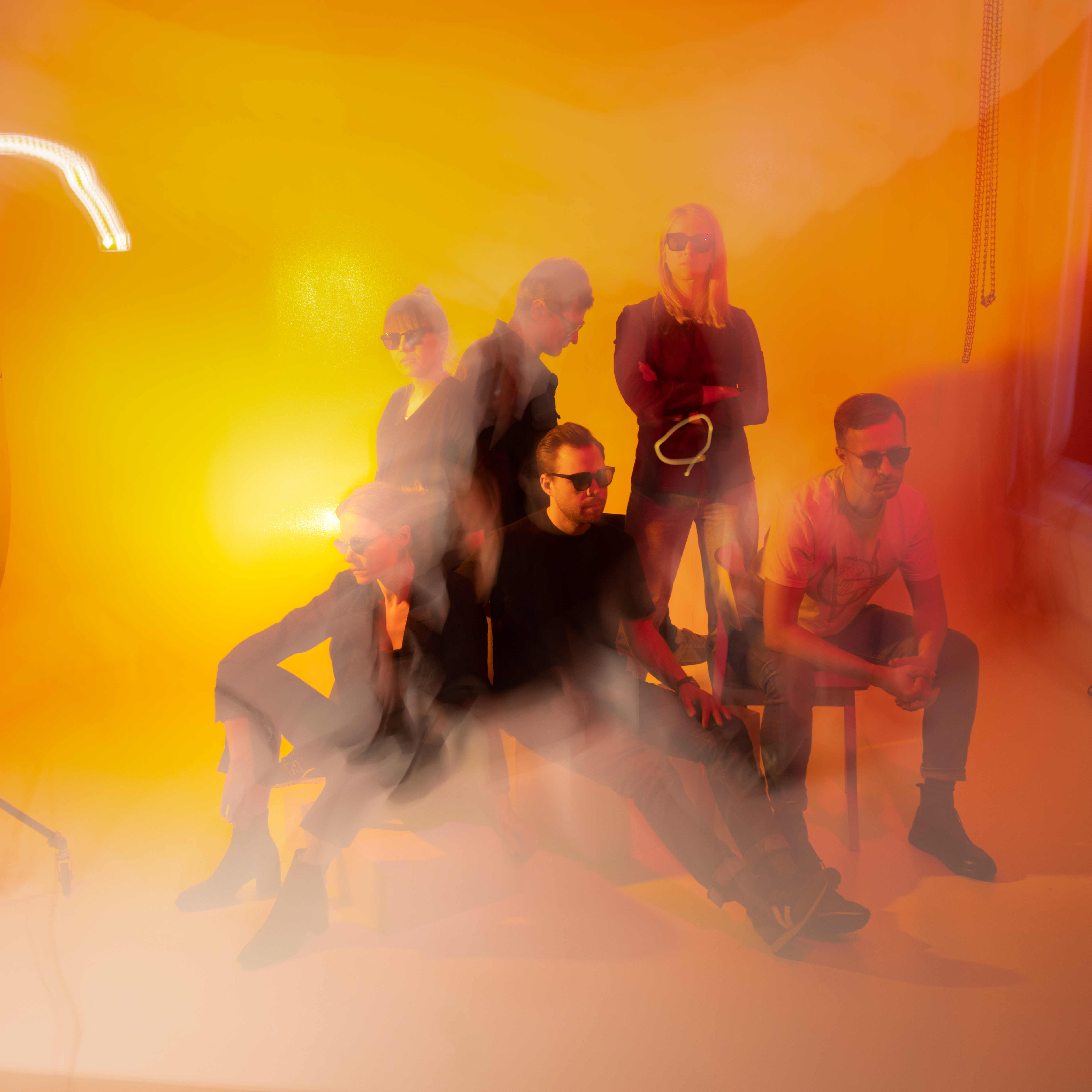
Always keeping an ear tuned to what newfound fave label Shore Dive Records is presenting is a smart move no matter what you might be currently listening to. Coming through once again with their momentous 50th release has them rolling out the debut EP by Polish emo-dreampop band Waterville.
Their four song EP “Shades And Whispers” creates of sonic world of interpersonal relationships that feature inventiveness through a heightened sense of awareness. Much of that can be attributed to a natural environment of lakes and tranquil locales that serve to inspire them.
Opening track “Shadows” also comes with a beautifully filmed, self-directed music video, capturing the intense feelings presented when paired with its music. Gentle, reverberated guitar picking is soon met with a rumbling bass and tom-tom drum undercurrents, as images of lush woodlands spliced with car-drive-interiors are set against a twilight mood. As a female and her male companion head out into the open space, hypnotic vocals state how “the dark shadows hide us – the dark mists hide us.” An initial emotional peak is reached with the rising, elongated vocal line “where you are” (where the last word is extended) and the two central figures begin to run towards various symbolic challenges. The dock on a serene body of water foreshadows eventual results.
The accompanying instrumental passages combine an air of mystery as well as building tension through those soft arpeggiated guitar chords and deep rumbling percussion. As guitars overlay and gain intensity, the two video figures are now running with purpose up a hill to vocals “the dark shadows hide us.” Once again an emotional peak is reached with crashing cymbals and the “You are, You are – where you are” refrain. Running across and staring out at gorgeous terrain provides an uplifting sense of hope against the more foreboding lyrics. Guitars and bass intertwine in further creative ways while the drumming undercurrent maintains its relentless pace. It all comes to a logical conclusion with the implied metaphor for taking a necessary risk and plunging into the unknown fully achieved.
The EP's second track “I Keep My Eye On You” develops at a slower, more languid pace. Gentle open note guitar figures mark out the progression as poignant female vocals deliver lyrical poetry of affection. A simple deep-thump “heartbeat” approximation is all the percussion necessary as the voice describes how “flowers of love with suddenly grow.” As much of an ode to that “summer” feeling, it's dreamy, gorgeous and utterly romantic.
“Out Of The Window” quickens the pace considerably with arpeggio guitar chords, primary note-only bass and click-clack rimshot percussion. There's a particular charm to hearing vocals delivered in English when it's not the singers primary language. Those words are formed with passion, while the accent adds another level of graceful allure. An unexpected vibraphone (or glockenspiel) sound enters the mix, enhancing lyrics “out of the window I see the rain – see the hail.”
Final cut “Hold Me” continues the moody, open string guitar textures while adding extended ambient tones alongside that. A gentle, delicate rumination that emphasizes singular words and short phrases (“thinking – breathing – beating of my heart”) sung out in an ethereal manner. The question is asked - “will you trust me when I am wrong? When I go out of my mind?”
Previous features on Shoredive Records artists on this site can be found here and here.
* * * * *
A trio of Japanese virtuoso musicians writing and recording under the collective name “mouse on the keys” have just released a four song EP titled “Arche.” As someone who listens to a lot of jazz piano trios in-between all the rock and pop consumed, an affinity for this record was immediately felt.
The trio deviates slightly from the traditional piano-based jazz-combo of drums, bass guitar and keyboards, creating everything instead with a drummer and TWO keyboard players. All three members are credited with “Programming” and one keyboard player adds synthesizer to their repertoire.
The constant line running through any progressive rock and/or jazz band is the highly evolved skill-level of their drummer. Opening track “Praxis” confirms that once again, not only emphasizing Akira Kawasaki's chops, but doubling-down on him having written the entire piece as well. As suspected there is no loss of bass presence, as synth-keyboardist Daisuke Niitome must surely be laying down a flawless approximation of an upright bass. With light and airy piano chords entering the mix, all three elements move forward with an elegant harmonic awareness. Piano lines carve out melodies while the percussion dances between beat propulsion and accented counterpoint.
Second song “Room” begins with bright piano figures, surely at the hands of it's composer Atsushi Kiyota – before the fully syncopated drumming enters the mix. Waves of piano notes in rolling formations alternate between more firmly struck chords. A solid bass pattern is heard once again (not bad for a band that does not have a bass player), moving the track along through open spaces that emphasize more sparse piano notes and percussive accents. Although a clear structure and melody is felt, an additional sense of improvisational playfulness seem to emerge within frequent open spaces. A rising electric piano melody enters the mix as a late-entry sonic element, leading the track to it's conclusion.
“Emergence” returns once again to the individual compositional prowess of drummer Akira Kawasaki, where shuffling percussion patterns emphasizing jazzy cymbals lay down a backbeat under boldly struck piano chords. A steady flow of rimshot clacks give the beat a lighter touch while piano note explorations build increasingly complex structures. Soon the snare drum is fully engaged as angular piano chords are interspersed between fleet piano forays. While the drumming increases it's levels of intensity, the piano pulls back and plays only the essential block chords structure.
Final track “Anchor” is keyboardist Daisuke Niitome's writing contribution to the EP, and brings aboard saxophonist Kenji Honzawa as an additional sonic element to the piece. Busy arpeggio keyboard notes are tempered by the longer held, stretched-out and softer sax tones running parallel. A distinctive bass pattern and quiet keyboard pad with intersecting percussion emerge momentarily before the piano explorations resume. That higher register Soprano sax is given room to open up with it's own improvisational bursts, while the initial progression cycles through again with subtle variations.
You can stream these tracks here - and find out how to acquire it and all of the bands back catalog. Additionally, you'll see an option from their label Topshelf Records offering a subscription plan that delivers all of the labels new releases digitally, as well as their 47 back-catalog items.
* * * * *
After being introduced to the music of Louisiana-based sound designer Bug Gigabyte and his SINthetik Messiah project back in January via savvy PR Company New Dark Ages, a review of his work (and the public good he supports) featured prominently here on this site at that time.
The artist is now back with a new release “Split Damage,” serving up two tracks that explores and expands on that 90's trip-hop sound that spawned creatives like Portishead and Massive Attack (to name just two).
The first cut “Languish” is a collaboration with vocalist and lyricist Cat Hall, which provides a foil for the primary composer and sonic manipulator to work off of. Those sounds build out of initially sparser notations, before layers of synthesizers create a mysterious landscape as the vocals unfold. Distorted processing adds a cybernetic effect to certain passages, before more clearly heard lines deliver pointed statements like “I want no limit on my sensations.” That begins a call-and-response cycle with the higher register lines echoing the song's title, responding: “languishing without your eyes on me.” While a mechanized forward march churns underneath, an orchestral feel swirls above with the blending of synths and voices in passionate reverie.
Second track “Emotional Therapy” is an over 7 minute tour-de-force featuring a long slow slithery groove. That extended progression serves as a base for the variety of sonic elements dropped in. Busy clattering percussion and throbbing bass pulses share space with hypnotic, repeated vocal samples used more as instrumental components than any kind of narrative. Extended moments of beatless ambiance provide momentary pause before percussive clacks and pitch-altered voices resume the forward momentum. A push-pull sensation is felt through deep bass and alternating rough-edged buzzing, while a distant higher-end voice is dropped in throughout the mix, providing repeated recitations.
Playing a dream-pop style of music they self describe as Nüdisco,Vltrarock and Echo Deco, the New York and Philadelphia based band Mahogany present a decade of recorded work as evidence. On "One Plus One Equals Three Or More" an angular bass line drives forward momentum as high-hat and snare heavy percussion rattle along side of it. Distant atmospherics soon work their way into the mix, as do handclaps and quickly strummed high-pitched guitars. The sum effect is one of a hyper funkiness. Vocals are delivered in a mostly male only or blended male-female tandem. "The View From The People Wall" continues the hyper-funk bass guitar with cymbal-emphasized percussion pattern, but features female vocals out front. While "Supervitesse" marshalls the formidable power of Cocteau Twins legend Robin Guthrie on the production chair for an as expected shimmering mix.
In addition to catching the band live during CMJ 2011
(all photos here and another video below from that performance)
I was fortunate to conduct an interview with the bands long time frontman
and motivating force, Andrew Prinz
*******
Describe how you feel your sound has changed in the decade since releasing “The Dream Of A Modern Day” up through “Connectivity.” Is your approach to making recorded music significantly different now?
On 'Dream' there was an overall superstructure established. The double album of our singles and EPs, "Memory Column," was concepted as a linear progression. The sound has evolved immeasurably, and sometimes very quickly — I reckon the listener's journey in 'Connectivity!' is quite a bit different than the writer's. There's perhaps a lot more of it that has been pragmatic or practical than any conscious directive, but the songwriting has always been the focus.
You self-describe the Genre of music you play as Nüdisco, Vltrarock and Echo Deco. Could you please explain a bit more what this actually defines?
In the film we've been working for the new songs, Mahogany is sort of an imagined city-state/canton-town. These self-made genres are keyword concepts for our 'city's' collective dance music, rock 'n' roll, and luxuriant sound scenes that are the 'city's' 'local music.' Within our songwriting, these keywords and others synchronize with the things we're aiming to touch on or speak about with the music, whether it's emotional, spiritual, tactile, logical.
Your band is listed as being located in both New York and Philadelphia – or using a word you have coined – Newphilyorkadelphia. Are there any advantages to be in two separate locations like this? Wouldn’t it be simpler to be consolidated in one place?
'Newphilyorkadelphia' is a keyword we created to illustrate a rail-based lifestyle many live today. Since the band moved to New York in 1999, myself and other members are often commuting by rail to and from New York, Philadelphia and beyond. There are many advantages afforded by multiple locations. We enjoy many music scenes and traveling by train holds a different timetable and a different approach — more pastoral and romantic. There is a certain glamor about trains; there is also great opportunity for the rail passenger to absorb the meditative possibilities in train travel. Guitarist Jaclyn Slimm One version of your song “My Bed Is My Castle” boasts the vocal debut of Lucy Belle Guthrie (daughter of Cocteau Twins’ Robin Guthrie and Liz Frasier). How did all that come about? How was it working with Robin, Liz and Lucy?
Robin was signed to our old label as 'Connectivity!' was being finished. We were ecstatic. We were always fans of Cocteau Twins — of course we said "yes" to the label's offer for him to remix some of our songs. His involvement was minimal but warm; the atmosphere during the final mixing of the record in March and April of 2006 was electric, and a hero coming by to say hello made it feel all the more magical. We loved his remix of 'Supervitesse.' Lucy Belle sang on a track. It was an honor to suddenly be gifted this relationship at the time. All the work was done via email. It was like 'Dad' was giving us a big sonic hug and a high five as we completed something that we'd been crafting for years; 'Connectivity!' was an album we'd begun developing even before the first album was finished.
Talk about the advantages (if there are any) or problems associated with music listeners ease of access to recording artists content via internet downloads. Do you yourself engage in music downloads?
Perhaps along with downloads we've seen the proliferation of 'earbuds,' which aren't all that great for your ears. Please do yourself a favor — invest in real headphones. Anyway, there are many advantages to downloads. But I do find myself in places sometimes where the streaming music that is playing has so much digital artefact and aliasing that it hides the articulation and detail of the recording. I don't use downloads often. It can feel anticlimactic, aside from issues of quality and fidelity. The context provided by the physical record sleeve, the artwork, and the aura of mystique is just too rich and deep for me to pass up entirely. Having said that, I find online film and video an incredibly valuable resource — I suppose what I'd like to see is the dawn of an acknowledgment of music's real place within multimedia or mixed media. Music often feels embattled and isolated lately, as something that most people think they should get for free. Perhaps more listeners can explore performance tradition as well — for example, buying and learning the sheet music of a favorite song for guitar or piano. Far more fun than 'earbuds.'
What artists do you feel had a significant influence on the musicians you’ve become today?
When I was playing upright jazz bass in high school, I had the opportunity to sit in classes and rehearsals with Dizzy Gillespie, Maynard Ferguson, Jon Faddis; those were direct experiences that taught everyone in the room about being a real star, and about endurance, poise, and longevity. My family have always been a huge influence on me, they are gifted in their own right.
As previously mentioned, Mahogany played live at The Delancey on the lower east (east) side of New York City on October 18, 2011 as part of The Deli MagazineCMJ "Dream Pop" Showcase.
Here they roll out a brilliant over 7 minute epic titled "Nite Time in Silk City"
Switching to equipment and recording questions, the interview continued:
How much of your recording is done at home versus in the studio?
We've worked in professional studios and also in completely ad hoc circumstances in remote locations. Both scenarios feel important.
If you use a studio, what do you record there and what do you record by yourself and why?
Studios can be great crucibles of creativity and can really help a project come together. The band's work is done less often alone than as a group; perhaps the work I find myself doing by myself is usually preparatory.
What are the pieces of equipment that you find particularly inspiring when recording at home?
I think we all share a healthy amount of enthusiasm for tools!
What one piece of hardware/software would you most like to add to your recording setup (cost not an issue)? Why?
Well-built recording tools are always a joy to behold. I read once in Tape Op about Pink Floyd's studio located on a ship. That sounds amazing.
Do you expect your next record to be self-produced, or would you like to work with a producer? If it’s the latter, who would you most like to produce your band?
We would very much like to work with Jeff Lynne
Do you use rack effects or guitar pedals to forge your own sound?
There are obvious advantages to both. There's been a great deal of diversity and expansion in the boutique pedal market, which is great to see. Again, there's no one set way of doing things — we have an abiding respect for a wide variety of hardware.
Do you have a particular recording style that you aim for? What techniques do you employ to recreate it?
I feel recording people could perhaps agree: our predilections and aims are really just happily engrained in our souls. I reckon I learned to record from listening, watching and participating — there's always something new to try.
What other artists would you say have had the biggest influence in your approach to recording? Why?
I was invited to work on a recording at Warren Defever's studio in 1996, and it was great to see how music-focused it could be. I do enjoy the work of producers like Martin Hannett, Phil Spector, and Jack Nitsche.
What do you find to be the most challenging aspects of the recording process? On the flipside, what aspects are the most rewarding?
There are certainly many challenging aspects, I'll agree with that! However, it is those challenges which are probably what make the recording process so poignant, interesting and full of possibilities.
Hailing from Austin Texas is an amazing band that goes by the name of Ume. They play a particular brand of music that they themselves classify as "experimental punk" and "heavy indie." Although I agree that these descriptions apply, I would add to that an extremely high level of musical ability, especially in the massive guitar chops of frontwoman Lauren Langer Larson.
Ume live at The Rock Shop, June 11, 2011 All photos by Dave Cromwell
Playing as a power trio, the band is rounded out by longtime bassist (and Lauren's husband) Eric Larson and recently added drummer Rachel Fuhrer.
Listen in to my recently conducted interview with the band, outside of The Rock Shop, where they had just completed their set on June 11, 2011.
Check out their live rendition on this night of one of their very best songs The Conductor
Here they rip out a glorious version of "Hurricane II"
Golden hair flying is a frequent visual at an Ume show.
In addition to be a truly masterful guitarist, Lauren is a wonderful singer as well.
One more live track from this great night of music
Dave Cromwell has been writing about music since the dawn of the internet age. In addition to the steady flow of features here on this site, he has been a regular contributor to The Deli Magazine (both Print and Web) since 2010. With numerous Print Issue cover features and weekly contributions on the Deli website, scores of artists have received the Cromwell point of view. Along with ongoing contributions to this site and The Deli Magazine, Dave has written for Dingus, My Social List, The Waster, Spin and Rolling Stone magazines.